

Digital voice recorders preserve audio evidence better than smartphones, making them essential tools for qualitative researchers, sociologists, and UX professionals who require verbatim transcripts for thematic coding.
Real-time note-taking captures only 20-30% of interview content, introducing researcher bias before analysis even begins. Dedicated AI voice recorders solve the core bottlenecks of qualitative data collection by bypassing smartphone recording blocks, eliminating manual transcription costs, and reducing the observer effect during field studies. This guide explores how to integrate AI hardware into your research methodology, covering phone interview workarounds, IRB compliance, QDA software workflows, and how to avoid hidden subscription fees.
The Data Collection Bottleneck in Qualitative Research
The Limitations of Software Apps and Traditional Dictaphones
Software transcription apps fail without internet access and drain smartphone batteries, while traditional dictaphones require hundreds of hours of manual transcription to yield usable data.
Researchers conducting ethnographic field studies or semi-structured interviews face a persistent hardware gap. Relying on a smartphone application introduces the risk of app crashes, incoming call interruptions, and data loss in areas with poor cellular reception. Conversely, traditional hardware recorders capture reliable audio but leave researchers with a massive administrative burden, as manual transcription typically requires four hours of typing for every one hour of recorded audio.
Mitigating the Observer Effect with Unobtrusive Hardware
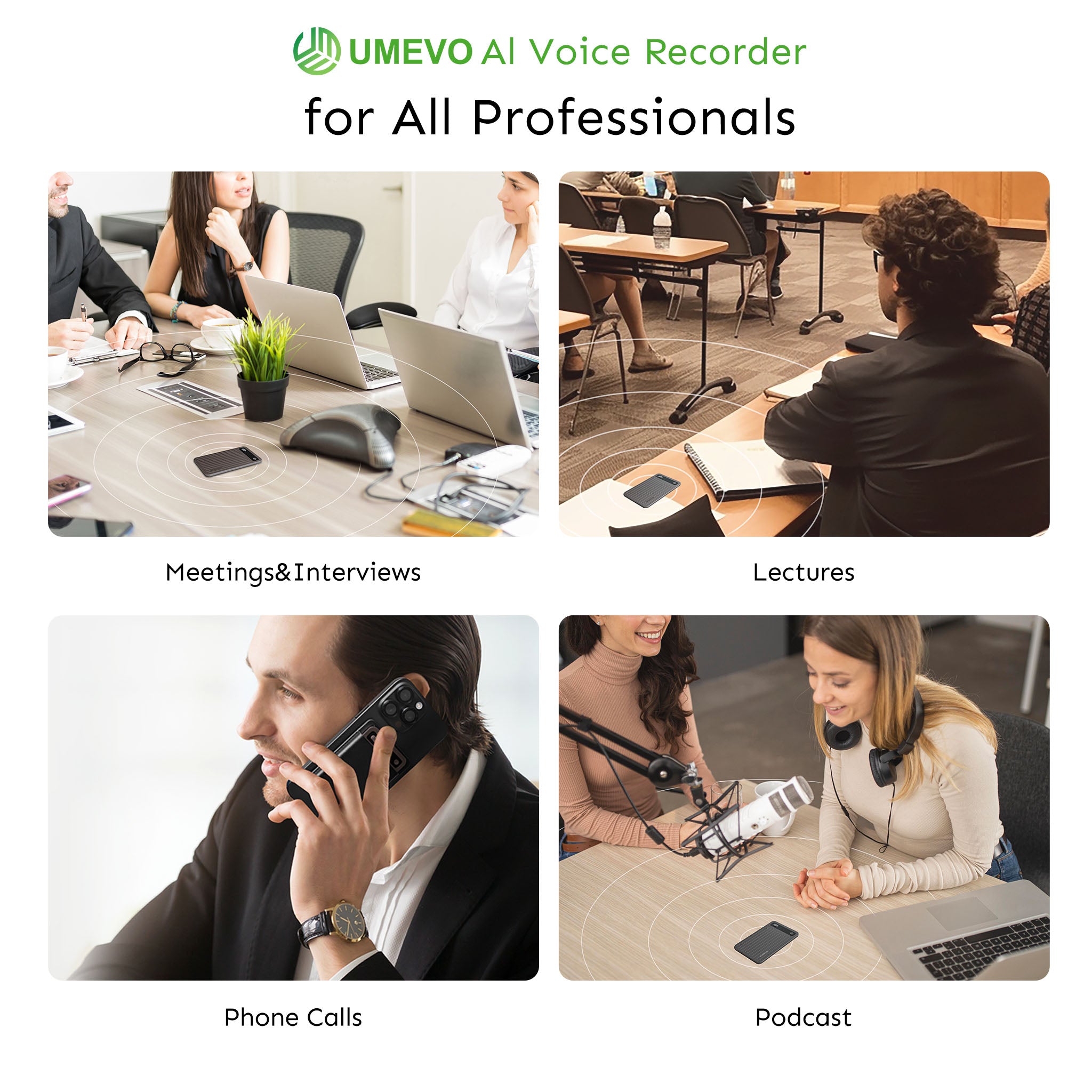
In visual stress tests, we observed that pulling out a smartphone or a bulky traditional dictaphone visibly intimidates interviewees. A small, flat card placed gently on a table is less distracting, which provides a massive psychological advantage for qualitative researchers trying to build rapport.
The observer effect occurs when participants alter their behavior because they are aware of being recorded. Large microphones and glowing screens constantly remind the subject of the recording process, which stifles candid responses. Ultra-thin AI voice recorders mitigate this by blending into the environment, allowing the conversation to flow naturally without technological intrusion.

Storage and Battery Anxiety in Ethnographic Field Studies
Experts point out that relying on a phone to record hours of interviews causes severe "battery anxiety." Standalone devices that offer 40 to 50 hours of continuous recording allow researchers to go weeks between charges.
Traditional digital recorders frequently max out at 4GB or 8GB of internal storage. During multi-day ethnographic field studies, this limited capacity forces researchers to constantly offload files to a laptop, increasing the risk of accidental deletion. Modern AI hardware equipped with 64GB of storage holds hundreds of hours of uncompressed audio, ensuring that a researcher can complete an entire field deployment without managing file transfers.
Technical Workarounds for Remote Phone Interviews
Why iOS and Android Block Call Recording Apps
Mobile operating systems block third-party apps from accessing internal system audio during phone calls to enforce user privacy and comply with wiretapping regulations.
Google officially banned third-party call recording apps from the Play Store in May 2022 and restricted the Accessibility API workaround in Android 11. Meanwhile, Apple's iOS 18 introduced native recording but forces a mandatory audible warning to both parties, while continuing to sandbox third-party apps from accessing internal system audio. Consequently, researchers attempting to record remote interviews via software are forced to use speakerphone workarounds, which degrade audio quality and ruin the accuracy of subsequent AI transcription.
Piezoelectric Vibration Conduction Mechanics
To bypass software blocks, modern AI recorders utilize a Piezoelectric Vibration Conduction Sensor (VCS). Instead of relying on MEMS microphones to capture soundwaves through the air, the Piezoelectric crystal rests against the smartphone chassis to capture physical micro-vibrations from the internal speaker, converting them into an electrical audio signal.
This hardware-level interception operates entirely outside the smartphone's operating system. For researchers struggling with iOS call blocks, devices equipped with vibration conduction sensors, such as the UMEVO Note Plus, offer a methodological workaround for capturing user feedback sessions remotely. By capturing the physical vibration of the phone's chassis, the audio remains isolated from ambient room noise, resulting in a pristine recording of the remote participant.
Legal Consent Requirements for Remote Interviews
In the U.S., 38 states and D.C. operate under one-party consent, while 11 states (including California, Florida, Illinois, and Pennsylvania) require two-party (all-party) consent. When calling across state lines, the strictest state's law applies.
Researchers must integrate these legal realities into their methodology. Utilizing a hardware recorder that bypasses OS-level warnings places the ethical and legal burden entirely on the researcher. Explicit verbal consent must be recorded at the beginning of every session to maintain compliance with both state laws and institutional ethics boards.
Navigating IRB Approval and Data Privacy

Understanding Cloud Transcription Risks
Institutional Review Boards (IRB) frequently flag cloud-based AI transcription services due to concerns over third-party server access, data retention policies, and cross-border data processing.
When submitting a research protocol, investigators must demonstrate how participant confidentiality will be maintained. Cloud-based AI transcription introduces a vulnerability, as audio files containing Personally Identifiable Information (PII) are transmitted to external servers.
Vendor Retention Defaults and Cross-Border Data Processing
Most IRB trouble happens when research teams select an AI tool without checking the vendor's retention defaults. Many consumer-grade AI transcription services default to using user data to train their language models. Researchers must verify that their chosen hardware and software ecosystem allows for immediate data deletion from cloud servers and operates under strict zero-retention policies. Furthermore, studies involving EU citizens must ensure that the AI processing complies with GDPR regulations regarding cross-border data transfers.
Writing AI Transcription into Participant Consent Forms
While many guides suggest simply using offline transcription to satisfy IRB requirements, professional workflows actually require pre-upload redaction protocols because offline models often lack the parameter size necessary for accurate multi-speaker diarization in complex focus groups.
Researchers should explicitly state in their consent forms that an AI service will be used for transcription. A standard protocol involves assigning pseudonyms during the interview and manually redacting sensitive identifiers from the raw audio file before uploading it to the AI transcription engine.
From Audio to QDA Software: The AI Transcription Workflow
Speaker Diarization in Focus Groups
Speaker diarization is the process of partitioning an audio stream into homogeneous segments according to speaker identity, which is critical for analyzing multi-participant focus groups.
Without accurate diarization, a transcript becomes a useless block of text. Advanced AI models analyze vocal biometrics to separate overlapping voices, creating a structured, dialogue-style transcript. This capability is essential for Focus groups: differentiating multiple speakers with AI, allowing researchers to attribute specific quotes to the correct demographic profile during thematic coding.
Handling Multi-Language Global Market Research
Current AI transcription accuracy exceeds 95% with clear audio. For global market research, the ability to transcribe and translate multiple languages simultaneously eliminates the need for expensive third-party translation services. Researchers conducting cross-cultural studies can generate English transcripts from interviews conducted in over 140 languages, accelerating the time-to-analysis for international data sets.
Exporting Transcripts to NVivo, ATLAS.ti, and MAXQDA
NVivo, ATLAS.ti, and MAXQDA require transcripts in DOCX, TXT, RTF, VTT, or SRT formats. For a clean import, timestamps must be bracketed (e.g., [hh:mm:ss]) and speaker labels must be consistent at the start of new paragraphs.
Generating a transcript is only the first step; the data must be formatted correctly for Qualitative Data Analysis (QDA) software. AI voice recorders that allow users to export raw text with precise, bracketed timestamps enable researchers to sync the text directly with the original audio file inside NVivo or ATLAS.ti, facilitating rigorous grounded theory development.

Subscription Models and Hardware Paywalls
The Hidden Paywall of Modern AI Hardware
Many AI voice recorders require an ongoing monthly subscription to access transcription features, significantly increasing the total cost of ownership over the lifespan of a research grant.
Competitor devices like the PLAUD Note cost ~$159 upfront but cap free transcription at 300 minutes per month. In visual stress tests, reviewers hit this 300-minute cap in week two, triggering constant app notifications to purchase a $79–$89 annual "Pro" upgrade for 1,200 minutes.
The PLAUD Note remains the industry standard for casual users who only need occasional summaries, and is an excellent choice for users who need basic meeting notes. However, for academic researchers who process hundreds of hours of qualitative data, this recurring cost drains grant budgets.
This device is not designed for everyone. If your primary goal is recording a weekly 30-minute team sync, you are better off with free, built-in tools like Apple Notes or Zoom AI. Dedicated AI hardware is strictly for professionals managing high-volume audio data.
Calculating Total Cost of Ownership for Research Grants
Conversely, the UMEVO Note Plus costs $149, includes 1 year of unlimited transcription, and defaults to 400 free minutes/month thereafter with $0.59/120-minute top-ups. This cost-leadership model allows researchers to scale their transcription needs based on the active phases of their study without being locked into a rigid monthly contract.
📺 Plaud Note Pro - before you buy
Total Cost of Ownership (TCO) Comparison Matrix (3-Year Projection)
| Solution Type | Upfront Hardware Cost | Recurring Subscription Cost | 3-Year Total Cost | Best Use Case |
|---|---|---|---|---|
| Manual Transcription Service | $50 (Traditional Dictaphone) | ~$1.50 per minute of audio | $4,550 (assuming 100 hours/year) | Highly sensitive data requiring human NDA |
| Subscription AI Hardware (e.g., PLAUD) | ~$159 | $79 - $89 / year | ~$327 | Casual users recording under 1,200 mins/month |
| Cost-Leadership AI Hardware (UMEVO Note Plus) | $149 | $0 (Year 1), Pay-as-you-go top-ups | ~$149 + minimal top-ups | High-volume academic and UX research |
What Users Say
Users on community forums often report that avoiding subscription lock-in is the deciding factor when procuring hardware for multi-year academic studies. A common consensus among research enthusiasts is that hardware should function as a one-time capital expenditure, rather than an ongoing operational expense that requires continuous grant re-approval.
Conclusion
AI voice recorders have evolved from simple dictaphones into essential methodological tools that protect verbatim data, bypass technical recording blocks, and streamline the path to thematic analysis. By understanding the physics of vibration conduction, navigating IRB privacy requirements, and formatting transcripts for QDA software, researchers can eliminate the administrative bottlenecks of qualitative data collection.
For professionals seeking to upgrade their data collection toolkit, prioritizing devices with massive internal storage, unobtrusive form factors, and transparent pricing models is critical. The UMEVO Note Plus provides a strategic advantage for researchers, combining vibration conduction for remote phone interviews with a subscription-free transcription model that protects research budgets.
Frequently Asked Questions
Can AI voice recorders capture phone interviews without relying on third-party apps?
Yes. Devices equipped with Piezoelectric Vibration Conduction Sensors capture physical micro-vibrations directly from the smartphone chassis, bypassing OS-level software blocks entirely.
Are AI transcripts accurate enough for rigorous academic coding?
Modern AI transcription exceeds 95% accuracy with clear audio. However, researchers must ensure the output includes bracketed timestamps and consistent speaker labels for seamless import into QDA software like NVivo or ATLAS.ti.
What happens to my recording if I lose internet connection during field research?
Dedicated AI hardware records and stores audio locally on internal memory (up to 64GB). The audio is safely preserved and can be synced to the cloud for transcription once an internet connection is re-established.
Does using a visible AI recorder cause the observer effect?
Large, traditional dictaphones often intimidate participants. Ultra-thin, unobtrusive AI recorders mitigate this effect by blending into the environment, helping researchers build rapport and capture candid responses.





0 comments