

Cost-conscious buyers evaluating AI transcription services frequently underestimate the long-term financial impact of subscription lock-in, overage fees, and data privacy compromises. The true cost of AI transcription extends far beyond the monthly subscription fee. Overage charges, feature paywalls, manual editing times, and data privacy compromises represent significant hidden expenses. For small teams and professionals, transitioning from a recurring SaaS model to a dedicated hardware AI recorder can eliminate subscription lock-in while dramatically improving data security. This guide breaks down the hidden mechanics of SaaS transcription pricing, exposes the privacy risks of free cloud tools, provides a 2-year cost comparison between software and hardware solutions, and offers a pre-purchase checklist.
Understanding AI Transcription Pricing Models: Subscription vs. Pay-As-You-Go
AI transcription pricing divides into two primary models: monthly SaaS subscriptions that charge a flat rate for capped minutes, and pay-as-you-go APIs that bill strictly for the exact seconds of audio processed.

The Monthly Subscription Model and Unused Capacity
Standard SaaS platforms charge a flat monthly fee for a set number of transcription minutes. The primary financial inefficiency here is unused capacity. Unused minutes rarely roll over to the next billing cycle. Consequently, users who experience fluctuating recording volumes—such as a researcher conducting 30 hours of interviews one month and zero the next—frequently pay for server capacity they never utilize.
Pay-As-You-Go APIs: Cost-Effective but Technical
For users willing to bypass consumer interfaces, pay-as-you-go APIs offer raw machine transcription at a fraction of the cost. According to Amazon Transcribe Pricing, Amazon Transcribe costs exactly $0.024 per minute for standard batch or streaming transcription (Tier 1 pricing, up to 250,000 minutes per month).
While cheaper, APIs lack user-friendly interfaces, speaker identification, and automated summarization. Furthermore, configuring these APIs requires developer knowledge, forcing non-technical users back to expensive SaaS platforms.
The Hidden Fees of Software Subscriptions: Minute Caps and Import Restrictions
Software subscriptions obscure their true costs through strict monthly minute caps, aggressive overage fees, and severe restrictions on importing pre-recorded audio files from external devices.
Minute Limits and Overage Charges
SaaS platforms enforce strict monthly limits, typically hovering around 1,200 minutes for standard professional tiers. Exceeding these limits mid-meeting stops the transcription process entirely. To resume, users are forced into expensive tier upgrades or high per-minute overage fees that scale poorly for small teams.
File Import Limits: Why Recording Outside the App Costs Extra
A major industry friction point involves importing pre-recorded audio. Otter.ai remains the industry standard for real-time collaborative meeting notes, and is an excellent choice for users who only record directly via their desktop app. However, for field researchers who record on external devices, restrictive import limits force expensive tier upgrades. Specifically, Otter.ai's Pro plan ($16.99/month) strictly limits users to importing only 10 pre-recorded audio or video files per month, despite offering 1,200 total transcription minutes. This penalizes users who rely on legacy hardware or external microphones.
The Cost of Manual Editing Due to Accuracy Errors
Low-cost or free transcription engines often utilize outdated language models that suffer from poor accuracy, particularly with technical jargon or heavy accents. The hidden cost here is labor. If a free tool requires two hours of manual editing to correct a one-hour transcript, the labor cost far exceeds the price of a premium service.
Pro Tip: While most people think a higher sample rate is always better, for voice dictation, 16kHz is actually superior for AI transcription accuracy because it isolates the human vocal range from high-frequency background noise, reducing the error rate for the AI engine.
Feature Paywalls: Extra Costs for Speaker Identification, Translation, and File Exports
Essential professional features like speaker diarization, multi-language translation, and standard file exports are frequently excluded from base subscription tiers, requiring costly enterprise upgrades.

Premium Charges for PDF, SRT, and DOCX Formats
Many entry-level transcription tools allow users to view transcripts within their proprietary web dashboard but restrict how that data leaves the ecosystem. Exporting files in professional formats like SRT (for video subtitles) or editable DOCX frequently requires a paid tier upgrade.
Speaker Diarization and Advanced AI Summaries
Advanced features—such as identifying individual speakers (diarization), generating mind maps, and creating structured meeting minutes—are frequently locked behind expensive enterprise tiers. As detailed in The 2026 Guide to AI Voice Recorder Features: From Raw Audio to Actionable Intelligence, comprehensive AI features should be evaluated as standard requirements for professional workflows, not premium add-ons.
The High Cost of Multi-Language Translation
Translating transcripts into multiple languages requires significant computational power. Cloud platforms typically meter this heavily, either by charging a separate per-minute translation fee or requiring the highest available subscription tier to unlock multi-language support.
Data Security Risks of Free Cloud Transcription Tools
Free cloud transcription tools subsidize their server costs by harvesting user audio data to train proprietary language models, creating severe security risks for confidential meetings.
How Free Tools Monetize Your Audio Data
Cloud-based transcription services incur high server costs for processing audio. To offset this, free tools often use uploaded audio and transcripts to train their proprietary Large Language Models (LLMs). In visual stress tests of transcription software marketing, we observed a retro 8-bit style graphic illustrating data flowing into a cloud, explicitly linking "Surveillance & Privacy" to a recurring "Monthly Cost" of $29.99. This visually anchors the hidden costs of standard AI transcription: you pay either with your wallet or your data.
Compliance Risks: GDPR, BIPA, and Confidential Meetings
Uploading confidential client data to third-party servers presents massive liability. The "Joint Editorial: Informed Consent and AI Transcription of Qualitative Data" (Samuel & Wassenaar, Journal of Empirical Research on Human Research Ethics, Nov 2024) highlights the severe ethical, consent, and privacy risks of using cloud AI transcription for confidential data. Medical, legal, and financial professionals risk violating GDPR and BIPA regulations when utilizing unvetted free bots.
The Offline Alternative: Local AI Models
Experts point out that users can bypass cloud risks entirely by processing audio locally. In visual demonstrations of offline workflows, users navigate a specific drop-down menu interface to select the "Parakeet V3" model under a "Local" tab. As one expert notes: "Install the Parakeet Version 3 model to run your transcription completely offline. No monthly fees, instant real-time transcription, nothing is sent to the cloud." This requires specific software configurations, such as VoiceInk for Mac or Palar for Windows, but guarantees zero data leaves the local machine.

Software Subscriptions vs. Hardware AI Recorders: A Two-Year Cost Comparison
Bypassing Operating System Recording Restrictions
Modern mobile operating systems (iOS and Android) block software apps from recording system audio or phone calls due to privacy APIs. Consequently, software-based transcription apps fail during mobile phone interviews. Hardware-based solutions solve this physical limitation by using vibration conduction sensors to capture phone calls directly from the phone chassis, bypassing software limitations entirely.
The Long-Term ROI of Hardware-Based AI Transcription
A standard SaaS subscription costs between $15 and $30 per month, totaling $360 to $720 over two years. Conversely, a dedicated hardware device requires a single upfront purchase.
The UMEVO Note Plus serves as a clear example of this cost leadership model. It includes 1 year of free unlimited AI transcription (via the Max Plan). In Year 2, users receive 400 free minutes/month, with non-subscription top-ups at $0.59 for 120 minutes.
Decision Note: This device is not designed for users who require real-time, multi-user collaborative editing in a shared cloud document. If your primary goal is live team editing across multiple remote locations, you are better off with a software suite like Descript. However, for professionals prioritizing data sovereignty and long-term cost reduction, hardware offers a more cost-effective path.
Hardware Performance and Versatility
Physical specifications dictate the utility of a recording device in the field. The UMEVO Note Plus features 64GB of built-in storage, 40 hours of continuous recording, 60 days of standby time, and an ultra-slim 0.12-inch, 1.06 oz MagSafe-compatible design. For further context on how these specs compare to the broader market, see the Best Affordable AI Note-Taking Devices in 2026 and UMEVO AI Voice Recorder Specs, Storage, Battery, and AI Features.
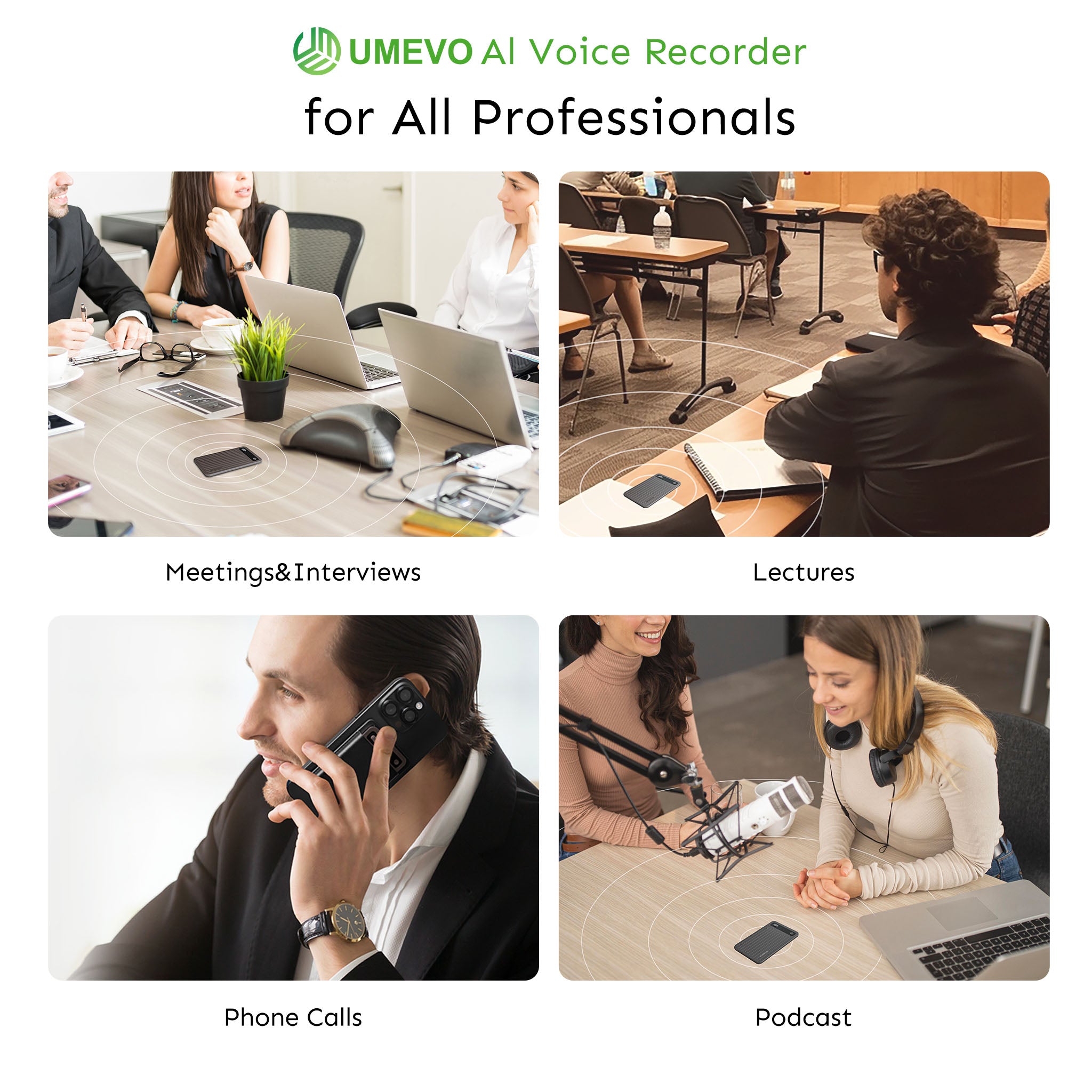


AI Transcription Cost & Feature Matrix
| Feature / Cost Metric | Standard SaaS Subscription (e.g., Otter, Descript) | Pay-As-You-Go API (e.g., AWS Transcribe) | Hardware AI Recorder (e.g., UMEVO Note Plus) |
|---|---|---|---|
| Upfront Cost | $0 | $0 | One-time hardware purchase |
| Year 1 Recurring Cost | $180 – $240+ | Variable (per-minute billing) | $0 (Includes 1 Year Free Unlimited) |
| Year 2 Recurring Cost | $180 – $240+ | Variable (per-minute billing) | $0 (400 mins/mo free; $0.59/120 min top-up) |
| File Import Limits | Often strictly capped (e.g., 10/month) | Unlimited (charged per minute) | Unlimited (64GB local storage) |
| Phone Call Recording | Blocked by iOS/Android OS restrictions | Not supported natively | Supported (Vibration conduction sensor) |
| Data Privacy | Cloud-processed; data may train LLMs | Cloud-processed; secure but complex | Secure (Local storage + ChatGPT-powered encryption) |
| Advanced AI Features | Often locked behind premium tiers | None (Raw text output only) | Included (Mind maps, speaker ID, 140+ languages) |
What Users Say: Community Consensus
Users on community forums often report that the most frustrating aspect of AI transcription is the unpredictability of monthly costs. A common consensus among enthusiasts is that SaaS platforms intentionally make it difficult to predict when a user will hit a minute cap. Real-world testing suggests that professionals who switch to local AI models or dedicated hardware recorders experience a significant reduction in decision fatigue, as they no longer have to ration their recording minutes to avoid overage penalties.
📺 Stop Paying for AI Transcription: Free and Private Offline Setup #Shorts
Conclusion
The hidden costs of AI transcription—including overage fees, file import limits, feature paywalls, and the privacy tax—drastically inflate the total cost of ownership for standard SaaS subscriptions. Cost-conscious buyers must look beyond the initial monthly sticker price to calculate the true 2-year financial impact. By evaluating hardware alternatives, professionals can break free from the SaaS subscription trap and protect their meeting privacy. For those seeking a physical solution, exploring devices like the UMEVO Note Plus provides a professional, ultra-slim hardware recorder that offers free unlimited transcription for the first year and flexible, subscription-free pricing thereafter.
Frequently Asked Questions
How do transcription services charge for overage minutes?
When users exceed their monthly minute cap, SaaS platforms typically force an immediate transition to a higher-priced subscription tier or charge inflated per-minute rates to continue processing audio.
Are there extra fees to export transcripts in PDF, SRT, or DOCX formats?
Yes. Many basic plans restrict export formats to plain text, requiring users to upgrade to premium tiers to access professional formats like SRT for video editing or DOCX for document formatting.
Do AI transcription tools charge extra for speaker identification (diarization)?
Frequently, yes. While basic transcription is cheap, identifying individual speakers accurately requires more processing power and is often treated as a premium or enterprise-only feature.
What happens to my data when I use free AI transcription tools?
Free cloud tools often subsidize their costs by harvesting your uploaded audio and text data to train their proprietary language models, posing severe privacy risks for confidential information.
Can I use my own API key to reduce AI transcription costs?
Yes, using an API key (like AWS Transcribe) reduces raw processing costs. However, it requires technical setup and lacks user-friendly features like dashboards, speaker identification, and automated summaries.
Are hardware-based AI recorders cheaper in the long run than software subscriptions?
Yes. A 2-year ROI comparison shows that a one-time hardware purchase eliminates recurring monthly fees, bypasses OS recording blocks, and avoids the expensive overage charges associated with software subscriptions.
References
- Amazon Transcribe Pricing — Amazon Web Services
- AI transcription tools: a time-saver or security risk? — Loughborough University
- Joint Editorial: Informed Consent and AI Transcription of Qualitative Data — National Institutes of Health (NIH) / PMC





0 comments