

Quick Answer: The initial wave of hyped, cloud-dependent AI voice recorders and wearables is undergoing rapid consolidation. Startups are shutting down or being acquired by tech giants because of unsustainable cloud API compute costs, subscription fatigue, and OS-level commoditization of basic transcription. To avoid buying devices that risk becoming useless "bricks," buyers are shifting toward practical, hybrid-storage hardware with sustainable unit economics, local storage fallbacks, and specialized physical recording capabilities.
Reader's Decision Framework: How to Evaluate AI Hardware Longevity
Before purchasing any AI-enabled recording hardware, buyers must look past venture-backed marketing hype. Use this three-pillar framework to assess whether a device will remain functional in three to five years:
┌─────────────────────────────────────────────────────────────────────────┐
│                       AI HARDWARE LONGEVITY MATRIX                      │
└────────────────────────────────────┬────────────────────────────────────┘
                                     │
            ┌────────────────────────┴────────────────────────┐
            ▼                                                 ▼
┌───────────────────────┐                         ┌───────────────────────┐
│   FINANCIAL UTILITY   │                         │  ARCHITECTURAL SAFETY │
├───────────────────────┤                         ├───────────────────────┤
│ • Sustainable pricing │                         │ • Local storage       │
│ • No forced sub-fees  │                         │ • Offline recording   │
│ • Low API overhead    │                         │ • Raw audio fallback  │
└───────────────────────┘                         └───────────────────────┘
                                     │
                                     ▼
                         ┌───────────────────────┐
                         │  SPECIALIZED HARDWARE │
                         ├───────────────────────┤
                         │ • Physical switches   │
                         │ • Vibration sensors   │
                         │ • OS-independent tech │
                         └───────────────────────┘
- Financial Utility (Unit Economics): Does the device rely on a forced, expensive monthly subscription to perform basic tasks, or does it offer flexible, pay-as-you-go pricing?
- Architectural Safety (The "Brick" Test): If the manufacturer's servers go offline tomorrow, does the device still record and store raw audio locally, or does it become an expensive paperweight?
- Specialized Hardware (The Moat): Does the device offer physical, hardware-level solutions (like vibration conduction for call recording) that software apps and smartphone operating systems cannot easily replicate or block?

The AI Hardware Bubble: Why Voice Recorder Startups are Shutting Down or Selling
The primary reason AI voice recorder startups fail is the high recurring cost of cloud-based LLM processing compared to flat-fee hardware sales. This financial mismatch, combined with rapid software advancements, has created a volatile market. Indeed, monitoring changes in venture capital investments in artificial intelligence through 2025 highlights how investors are shifting focus toward long-term operational sustainability.
The "Feature vs. Product" Trap
Basic AI transcription and summarization are rapidly becoming commoditized. Tech giants are integrating these features directly into mobile operating systems. For example, Apple integrated native audio recording, real-time transcription, and Apple Intelligence-powered summarization directly into the iOS 18 Notes and Voice Memos apps.
Standalone startups that only offer "audio-to-text" cannot survive as independent hardware companies when the software layer is free and built-in elsewhere. This shift forces buyers to evaluate the Latest AI hardware powered by LLMs based on physical utility rather than software novelty.
The Brutal Unit Economics of LLM APIs
Selling a physical device for a one-time flat fee while paying recurring, lifetime API costs (for OpenAI, Anthropic, or custom LLMs) to process, transcribe, and summarize hours of audio is a fundamentally flawed business model. "Lifetime free AI" promises inevitably lead to startup bankruptcy or forced, high-cost subscription models that alienate early adopters. Streaming audio and LLM summarization carry high infrastructure costs that cannot be sustained by a single $99 hardware purchase.
Subscription Fatigue and the Solo Worker ROI
Consumers are increasingly hesitant to pay monthly fees for standalone recorders. The $19 to $29 monthly subscription fees required to keep single-purpose wearables active create massive friction. The return on investment for these high-cost subscription models is non-existent for solo workers or professionals who only attend a few meetings a week.
High-Profile Exits: What Happened to Humane, Bee, and Limitless?
Tech giants are absorbing startups to integrate voice-first building blocks, not necessarily to scale their consumer hardware lines. Analyzing venture capital investment decisions in artificial intelligence reveals how quickly resources are reallocated when standalone consumer device sales fail to hit target scales.
- Humane: After raising massive venture capital, the company transitioned from a highly hyped, standalone "screenless" wearable to asset acquisition discussions with major hardware manufacturers. The market largely rejected the expensive, daily-wear laser projection concept. Reports indicate HP acquired assets from Humane, and the AI Pin servers were permanently shut down in early 2025, bricking active devices.
- Bee: Early-stage ambient voice concepts are being absorbed into larger corporate ecosystems. The Bee AI wearable was acquired by Amazon, shifting focus away from consumer hardware to enterprise software integration.
- Limitless: The Limitless AI Pendant featured strong physical design, such as its magnetic clasp and compact form factor. However, its long-term viability was heavily tied to its software ecosystem. Following its acquisition by Meta, new hardware sales ceased.
The Reality of Daily Wear
Real-world usage of ambient pendants reveals practical challenges. On a white t-shirt, a dark pendant and its active recording LED stand out prominently. While it camouflages better on dark clothing, the recording light remains visible. This highlights the necessity of physical privacy controls, such as a tactile mute button that visibly disables the recording LED, giving users and those around them peace of mind.

The "Brick Risk": What Happens When Your AI Hardware Loses Cloud Support?
Cloud-dependent hardware becomes useless if the parent company shuts down. This architectural flaw is the greatest threat to buyers in the current market.
The Danger of Cloud-Only Architectures
When a startup shuts down its servers, cloud-dependent devices lose their ability to process audio, retrieve past notes, or even boot up. Traditional hardware functions independently of external server status, but modern AI wearables often lack this basic resilience.
The Loss of Personal Audio Memory
If a company goes bankrupt, users risk losing access to their entire history of transcribed meetings, brainstorms, and personal archives. Buyers must prioritize raw audio fallback—the ability to access and play back the original, uncompressed audio files directly from the device's physical storage. This serves as a fail-safe when AI transcriptions hallucinate or cloud services fail.
The E-Waste Crisis of Hyped Wearables
Purchasing proprietary, cloud-locked hardware that cannot be repurposed or used with alternative software platforms contributes directly to electronic waste. Once the parent company ceases operations, these devices cannot even function as basic USB microphones.
The Shift to Sustainable AI Hardware: Why Practicality is Winning
The market is moving toward practical, dual-mode devices with sustainable pricing. General-purpose ambient "life-tracking" wearables are failing to find a permanent market, while highly targeted, utility-first tools are thriving. This aligns with the broader Rise of agentic meeting assistants.
The Role of Physical Hardware Moats
Software apps fail at critical recording tasks: mobile operating systems block direct call recording due to privacy permissions, and incoming phone calls automatically interrupt active app-based recording. Physical hardware solutions, such as vibration conduction sensors, capture audio directly from a phone's chassis, completely bypassing software limitations and OS restrictions.

The "Sanitization" Prompt Hack for Enterprise Security
Enterprise buyers face strict security compliance rules. A practical user workaround involves prompt engineering hacks that instruct the AI to replace sensitive company or product names with generic placeholders (e.g., "Please give me the meeting summary but replace all Company Names with ABC_XYZ") before processing data in the cloud.
📺 Limitless AI Pendant Review: 6 Game-Changing Features After 5 Days (Worth $199?)
UMEVO Note Plus: Built to Outlast the Hype
UMEVO offers cost leadership and specialized hardware that avoids startup traps. By focusing on sustainable unit economics and physical hardware moats, the UMEVO Note Plus Magnetic Call Recorder is designed for longevity.
Cost Leadership & Sustainable Unit Economics
UMEVO solves subscription fatigue through a hybrid model:
- Free Unlimited AI Transcription (Year 1): Offers a full year of unlimited AI transcription (Max Plan) without immediate monthly fees.
- Generous Post-Year 1 Free Tier: Provides 400 minutes per month for free after the first year, ensuring the device remains highly functional without ongoing costs.
- Flexible Pay-As-You-Go Top-Ups: Allows users to purchase affordable top-ups (e.g., $0.59 for 120 minutes) instead of being locked into expensive monthly subscriptions.
Specialized Dual-Mode Hardware Moat
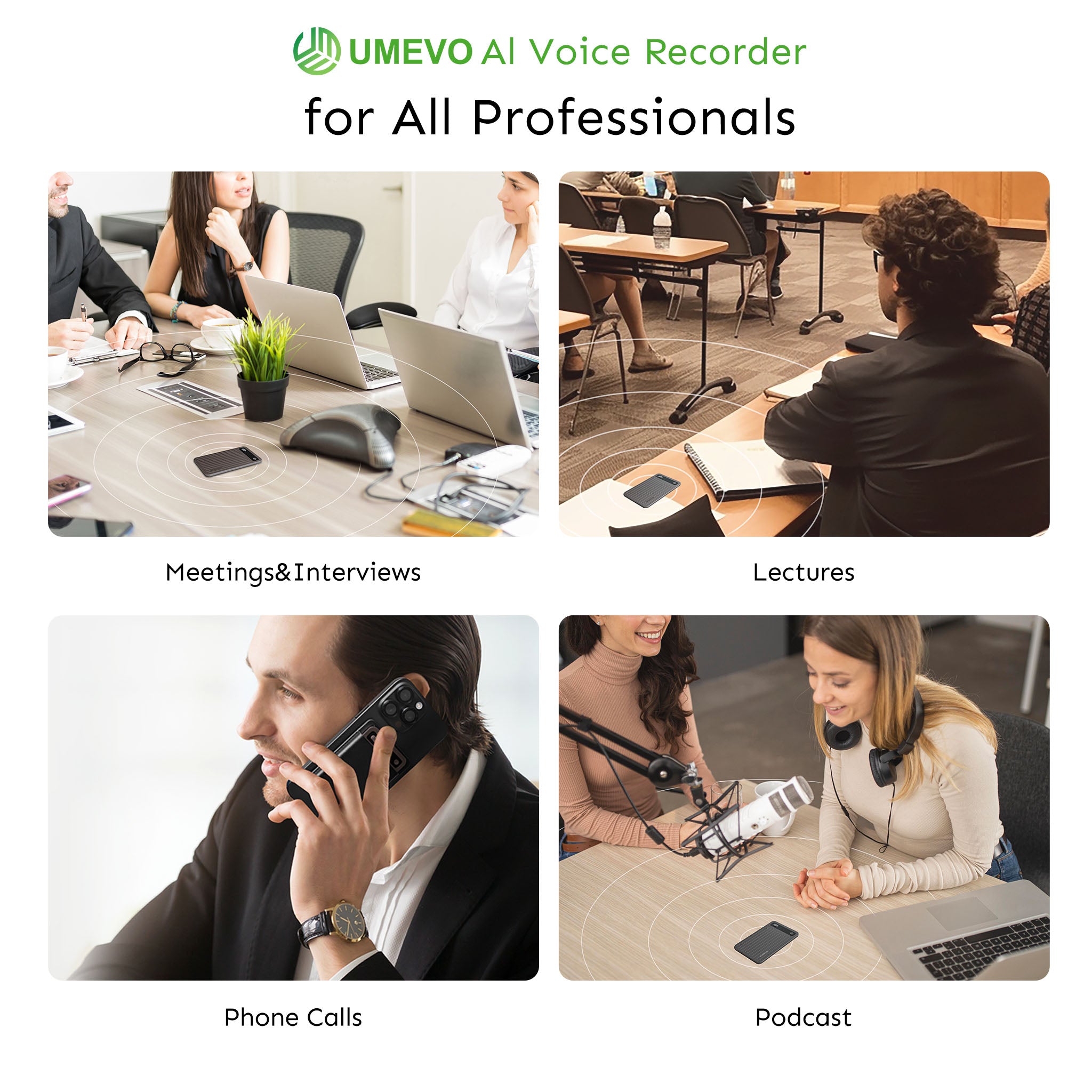
- MagSafe Compatibility & Vibration Conduction: Attaches magnetically to smartphones. Features a specialized vibration conduction sensor that captures phone call audio directly from the phone's chassis, bypassing OS-level software recording blocks.
- One-Press Physical Switch: A tactile physical switch lets users instantly toggle between "Call Recording" (vibration-based) and "Note Recording" (standard air-conduction for in-person meetings).

Advanced ChatGPT-Powered Intelligence
- Comprehensive Language Support: Transcribes and translates in over 140 languages.
- Smart Summarization & Custom Templates: Generates structured meeting minutes, mind maps, and industry-specific templates tailored for legal, medical, or sales professionals.
- Speaker Identification: Distinguishes between multiple speakers to create clean, dialogue-style transcripts.
Flagship Hardware Performance & Local Storage Fail-Safe
- 64GB Built-In Storage: Eliminates the "brick risk" by storing massive amounts of raw audio locally, far exceeding the standard 4GB or 8GB found in traditional recorders.
- Ultra-Long Battery Life: Offers 40 hours of continuous recording and 60 days of standby time on a single charge.
- Ultra-Portable Design: Measures just 0.12 inches thick and weighs 1.06 oz, designed to fit seamlessly behind a phone or in a pocket.

How to Choose an AI Voice Recorder That Won't Become E-Waste
Traditional tech reviews often fail buyers by focusing only on initial software features while ignoring long-term subscription costs, server dependency, and physical hardware durability.
The AI Voice Recorder Comparison Matrix
| Feature / Metric | UMEVO Note Plus | Hyped Cloud Wearables | Legacy Digital Recorders |
|---|---|---|---|
| Local Storage | 64GB (Raw audio fallback) | None or Minimal (Cloud-only) | 4GB - 8GB (No AI integration) |
| Subscription Model | 1 Year Free, then 400 min/mo free or pay-as-you-go | Forced monthly fee ($19-$29/mo) | None (No AI features) |
| Call Recording Method | Physical Vibration Conduction (OS-independent) | None (Incompatible with phone calls) | In-ear microphone adapter required |
| Brick Risk | Low (Works offline as a standard recorder) | High (Useless if servers shut down) | None (Offline-only) |
| Form Factor | 0.12-inch ultra-slim MagSafe | Pendant / Clip-on wearable | Bulky handheld device |
The Buyer's Longevity Checklist
- Does the device have at least 16GB of local, physical storage?
- Can I export raw audio files (.wav or .mp3) directly to a computer without using a cloud app?
- Is there a clear, non-subscription tier or pay-as-you-go option for AI processing?
- Does the device feature physical, tactile controls (like a mute switch or recording toggle) for reliable privacy management?
- Can the hardware record phone calls without relying on software screen-recording hacks?
FAQ
Are AI voice recorders legal for phone calls?
Legality depends entirely on your local jurisdiction. Some regions require "one-party consent" (where only one person on the call needs to know it is being recorded), while others require "all-party consent" (where everyone on the call must explicitly agree). Users must check and comply with local wiretapping and recording laws before using any recording device.
Do I need a subscription to use an AI voice recorder?
While many hyped startups force you into a monthly subscription, sustainable models like the UMEVO Note Plus offer a hybrid approach: one year of free unlimited transcription, followed by a generous free monthly tier (400 minutes) and affordable, pay-as-you-go top-ups.
What happens to my data if an AI hardware startup shuts down?
If the device is cloud-dependent and lacks local storage, you will likely lose access to both the device's functionality and your stored data. Choosing a device with large local storage (like 64GB) ensures your raw audio files remain safe and accessible directly from the hardware, regardless of the manufacturer's financial status.
Who should NOT buy an ambient AI wearable?
Ambient wearables are highly impractical for solo workers who rarely attend meetings, as well as professionals handling highly sensitive, classified, or legally protected data (such as medical, legal, or proprietary corporate IP) where cloud-based processing poses a compliance liability.
How does physical vibration conduction bypass mobile operating system restrictions?
Physical hardware solutions, such as vibration conduction sensors, capture audio directly from a phone's chassis, completely bypassing software limitations, privacy permissions, and OS-level call-recording restrictions.





0 comments