

An AI meeting recorder M&A due diligence strategy prevents deal leaks while eliminating hours of manual note-taking. The sheer panic of a highly confidential, pre-merger deal leaking because a junior analyst used a consumer-grade AI tool to summarize a call—and it automatically emailed the transcript to the entire calendar invite list—is a reality many firms face today. In the current landscape, the biggest M&A security threat isn’t a visible bot on your Zoom call; it’s the blast radius of your audio data after the meeting ends. The only secure standard for deal teams is On-Device Processing (Local LLMs) combined with zero-day audio retention.
The Fundamental Rule of AI in Deal Prep: Process Evolution, Not Output Replacement
AI integration is an operational shift because it changes how data is captured without altering the legal obligation to protect it.
In visual stress tests and industry panels, experts emphasize that AI does not eliminate the rigor of diligence. During a recent legal tech panel concluding with a promotional graphic for the Litera whitepaper "The Unexpected Benefits of Using AI in Due Diligence Review," the consensus was clear: AI is an infrastructure upgrade, not a replacement for human analysis. As panelist Josephine Good noted verbatim regarding the integration of AI in legal workflows: "I don't think the core work has changed. There's still the need to do that work. It's just the way in which firms are doing it is so different in so many ways..." [0:27].
📺 The Unexpected Benefits of Using AI in Due Diligence Review
Consequently, the obligation to protect deal confidentiality remains static. Adopting consumer AI changes the methodology, but if that methodology breaks the confidentiality obligation, the tool becomes a severe liability.
Counter-Intuitive Fact: Adopting a faster transcription tool often increases your compliance burden if the tool's data routing methodology violates existing non-disclosure agreements.

Integrating an AI meeting recorder M&A due diligence workflow: Beyond the "Botless" Delusion
Botless recording is a superficial fix because it hides the AI from the user interface while still exfiltrating raw audio to external cloud servers.
Current industry advice focuses heavily on the social etiquette of hiding a bot (like OtterPilot or Fireflies) during sensitive LP updates. This solves the "bad signaling" problem but completely ignores data exfiltration. The real threat lies in the analyst bullpen. According to the JumpCloud 2024 Shadow AI Stats and BlackFog 2024 Research, 80% of office workers use public AI tools without IT approval, and 60% of employees admit they are willing to bypass security protocols if it helps them work faster. Furthermore, 20% of organizations experienced security incidents directly linked to Shadow AI in 2023. Many analysts are looking for the Best AI voice recorder for conference calls 2026 to streamline their workflows.
When compliance blocks modern AI tools, junior bankers secretly use unapproved personal accounts. This creates massive, unaudited vulnerability surfaces and an internal blast radius where unauthorized employees might access pre-merger transcripts via poorly permissioned, shared AI cloud workspaces.
Pro Tip: Do not audit the bot; audit the audio file's destination. If the raw audio leaves the host machine, the tool is a liability regardless of its visibility on a Zoom call.
Cloud Processing vs. The Third-Party Doctrine Waiver Risk
Cloud-based transcription is a legal liability because routing raw audio through external servers risks waiving attorney-client privilege under the Third-Party Doctrine. This is a primary concern for Legal professionals using AI voice recorders.
If you use a "botless" AI recorder, the audio often still goes to the vendor's cloud to train models. Allowing a cloud AI server to process raw audio can break M&A privilege. Furthermore, standard SOC 2 Type II compliance is insufficient for cross-border deals. The US CLOUD Act allows U.S. law enforcement to compel U.S.-headquartered cloud providers (such as AWS, Azure, or Google Cloud) to hand over data regardless of where the servers are physically located. According to IOMETE & Oxmaint 2024 Data Sovereignty Reports, this overrides local data residency protections like the GDPR.

Counter-Intuitive Fact: Hosting an AI meeting recorder on a European cloud server still fails M&A confidentiality requirements if the parent company is U.S.-based, exposing cross-border deals to foreign subpoenas.
The Hardware Benchmark: On-Device Processing & Local LLMs
On-device processing is the secure standard because it executes transcription entirely offline, eliminating cloud compute reliance and data exfiltration risks.
Eradicating the cloud requires desktop-native AI. The modern baseline for secure capture is transcription that runs entirely offline on the user's local machine. According to Overchat AI and Reddit (r/BlackboxAI_) 2024 Local LLM Hardware Guides, running a capable local LLM (7B–13B parameters) entirely offline requires a minimum of 16GB of system RAM (32GB recommended) and either an Apple Silicon Mac (M-series with unified memory) or a dedicated GPU with at least 16GB of VRAM (e.g., RTX 4060 Ti).

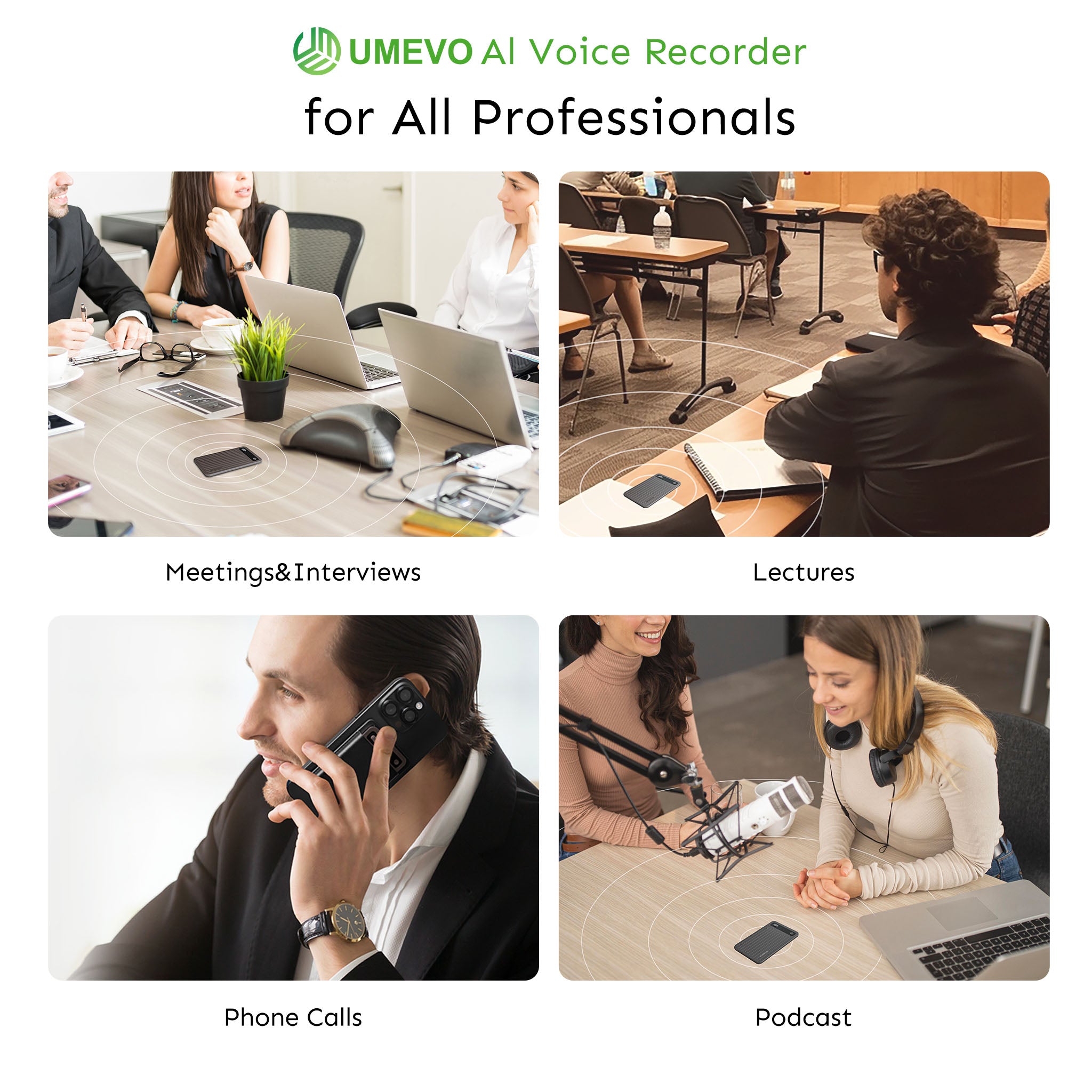
For enterprise teams with massive IT budgets and standardized high-end workstations, deploying open-source local LLMs directly onto employee laptops remains the strongest choice for absolute data sovereignty. However, for hybrid deal teams who prioritize cross-platform flexibility (iOS, Android, Windows) without upgrading their entire hardware fleet, the UMEVO Note Plus offers a strategic alternative. By utilizing a physical vibration conduction sensor to capture audio directly from the phone's chassis—bypassing software permissions entirely—it provides an air-gapped hardware capture method before routing to its secure, 140+ language transcription environment.

Pro Tip: Before approving any AI tool, require the vendor to demonstrate a "flight mode" test. If the transcription fails without Wi-Fi, it is not truly on-device.
The "6-Layer Privacy Stack": Passing a Vendor Security Review
The privacy stack is a compliance framework because it mandates local processing, zero-day retention, and native CRM sandboxing to pass IT audits.
Passing a vendor security review in days, not months, requires a strict framework that addresses both hardware and regulatory requirements.
- Layer 1-2: On-Device Processing & EU AI Act Readiness: Keeping data strictly local inherently bypasses massive swathes of regulatory red tape. The binding enforcement date for the EU AI Act's high-risk AI system obligations is August 2, 2026. Non-compliance carries severe penalties reaching up to €15 million or 3% of a company's global annual turnover, per Baker Botts & Cloud Security Alliance 2024 Legal Alerts.
- Layer 3-4: Zero-Day Audio Retention & Air-Gapped Workflows: Providers must instantly delete the raw audio file the millisecond transcript generation completes.
- Layer 5-6: Native CRM Sandboxing & Access Controls: Deal summaries must route directly into encrypted Salesforce environments without lingering in third-party dashboards.
Counter-Intuitive Fact: A 30-day data retention policy is a vulnerability, not a feature. In M&A, zero-day retention is the only acceptable standard for raw audio files.
Entity Comparison: Cloud vs. Local vs. Hybrid Hardware
Hybrid hardware is a strategic compromise because it balances the strict security of local processing with the portability required by traveling deal teams.
| Feature / Attribute | Cloud-Based AI (e.g., Otter, Fireflies) | Local LLM (Desktop Native) | Hybrid Hardware (e.g., UMEVO Note Plus) |
|---|---|---|---|
| Processing Location | External Servers (AWS/GCP) | On-Device (Requires 16GB+ RAM) | Dedicated Hardware (64GB Storage) |
| Third-Party Doctrine Risk | High (Waives Privilege) | Zero (Air-gapped) | Low (Hardware-level capture) |
| Cross-Platform Portability | High (Web/App based) | Low (Tethered to workstation) | High (MagSafe/Vibration Conduction) |
| Ideal User Profile | General marketing/sales teams | In-house legal with high-end PCs | Traveling M&A analysts needing offline capture |
Community Consensus: What Deal Teams Say
Deal teams are frustrated because compliance departments block efficient tools without providing secure, locally processed alternatives.
Users on community forums often report a massive disconnect between IT compliance and the analyst bullpen. A common consensus among enthusiasts on Wall Street Oasis and Reddit is that junior bankers are drowning in manual note-taking. Real-world testing suggests that when firms mandate "botless" cloud tools, they merely shift the risk from visible embarrassment to invisible data exfiltration. The community demands tools that offer the speed of cloud AI with the security of a local hard drive.
Conclusion & Next Steps
Relying on cloud-based AI meeting recorders is corporate negligence because it exposes confidential deal terms to external servers and foreign subpoenas.
In the high-stakes environment of M&A due diligence, relying on cloud-based AI meeting recorders—visible or hidden—is a critical vulnerability. On-device processing and dedicated hardware capture are the only ways to modernize workflows while maintaining absolute deal confidentiality. Stop letting your analysts risk deal leaks with consumer shadow IT. Equip your team with tools that respect zero-day audio retention and bypass the US CLOUD Act entirely.
Frequently Asked Questions
How do we pass a grueling compliance/IT vendor security review without a 3-month delay?
Present a Local LLM or dedicated hardware architecture to IT, proving that raw audio never touches external cloud compute and adheres to zero-day retention policies.
Does botless recording mean my data is safe from cloud LLM training?
No. Botless only hides the user interface. The raw audio is still routed to external servers, risking data exfiltration and Third-Party Doctrine waivers.
How do I prevent junior analysts from leaking deal terms through personal Otter.ai accounts?
Provide a compliant, faster, locally-processed alternative that eliminates the need for Shadow IT. If analysts have a secure tool that works, they will not bypass IT protocols.
What are the minimum hardware specs required for on-device AI transcription?
Running a local LLM requires a minimum of 16GB of system RAM (32GB recommended) and an Apple M1 processor or a dedicated GPU (e.g., RTX 4060 Ti) to process audio efficiently offline.





0 comments