

Client-facing professionals are increasingly experiencing meeting refusals due to the proliferation of visible AI meeting bots. Visible AI bots are no longer viewed as a harmless productivity hack; they are recognized as a compliance liability and a barrier to rapport. The enterprise standard has shifted away from visible auto-joiners toward "Bot-Free" desktop recording to prevent consent fatigue and legal discovery traps. This guide breaks down the social friction of the Hawthorne Effect, the severe legal liabilities driving enterprise bans, and the exact workflow required to capture decision-grade minutes without triggering client pushback.
Imagine screen-sharing your desktop during a high-stakes client pitch, only for the client to pause, spot the rogue bot avatar in the participant list, and coldly ask: "Wait... are you recording this?" It instantly destroys trust.
Why Visible Meeting Bots Create Client Pushback
Visible meeting bots create client pushback by inducing the Hawthorne Effect, where participants self-censor and generate fewer ideas due to algorithmic monitoring, ultimately replacing collaborative chemistry with a guarded, formal atmosphere.
According to a 2024 Cornell University study published in Communications Psychology (Schlund & Zitek), participants under algorithmic surveillance generated fewer ideas, perceived less autonomy, and self-censored more heavily compared to those monitored by humans. This scientific benchmark validates the "deposition vibe" that plagues modern virtual meetings.
Furthermore, a 2024 Calendly survey revealed that 58% of professionals feel uncomfortable when an AI meeting bot joins unexpectedly, and 41% actively modify their behavior when they know a bot is recording.
While many guides suggest that transparency via a highly visible bot builds an open culture, professional workflows actually require localized, invisible recording. This frequently prompts teams to evaluate the differences of recording meetings with hardware vs a bot. Visible bots act like a boom mic shoved in a client's face. They induce consent fatigue, forcing participants to constantly manage recording pop-ups and disclosures, which disrupts the natural flow of conversation.
The Legal and Compliance Liabilities of AI Auto-Joiners

AI auto-joiners introduce severe compliance liabilities by permanently transcribing corporate hyperbole into discoverable documents and creating legal traps through algorithmic transcription errors.
Experts point out that corporate brainstorming relies heavily on hyperbole. In a broadcast segment from KSL Newsradio's "Inside Sources," hosts highlighted a fascinating nuance regarding corporate liability: if an executive exaggerates during a brainstorm, saying "we will dominate the category," an AI bot transcribes this permanently. If the company faces an antitrust lawsuit later, that off-hand comment is locked in a discoverable document. Relying on human memory allows off-hand comments to fade; with AI, they become permanent liabilities.
Additionally, transcription accuracy remains a massive blind spot. In visual stress tests and expert reviews, AI bots frequently miss crucial negative contractions. Transcribing "we don't want to do that" as "we do want to do that" creates a severe legal trap. If this surfaces in litigation nine months later, it is incredibly difficult to retroactively prove to a judge that the AI hallucinated the statement.
The legal industry has formally recognized this threat. On December 22, 2025, the New York City Bar Association issued Formal Opinion 2025-6, explicitly warning that using AI notetakers without strict client consent and data safeguards risks violating ethical duties of confidentiality and privilege. Consequently, lawyers are explicitly advising teams to implement "Exclusion Protocols," instantly kicking out any proxy bot from a waiting room to preserve relationship confidentiality.
Does an AI Meeting Bot Waive Attorney-Client Privilege?
Yes, allowing an unsupervised AI meeting bot into a confidential discussion waives attorney-client privilege because utilizing a third-party transcription device destroys the reasonable expectation of privacy required to maintain relationship confidentiality.
On February 10, 2026, Judge Jed S. Rakoff of the Southern District of New York ruled in United States v. Heppner (No. 25 Cr. 503) that sharing information with a third-party AI tool waives attorney-client privilege because the tool's data collection policies destroy any reasonable expectation of privacy. Allowing an unsupervised third-party AI to absorb real-time strategy means you are automatically voiding relationship confidentiality.
Data Security Risks: Rogue Bots and Shadow AI
Shadow AI refers to unapproved, decentralized bot proliferation across an enterprise that bypasses IT security, allowing rogue auto-joiners to aggressively integrate with calendars and crash sensitive meetings uninvited.
📺 Lawyers voice concerns over A.I. note takers
Gartner predicted that by 2025, 40% of enterprise organizations would restrict or ban third-party meeting bots due to data security and compliance concerns. Employees connecting aggressive calendar integrations bypass IT security, allowing uninvited bots to record sensitive third parties.
This liability materialized in August 2025, when a consolidated federal class-action lawsuit (In re Otter.AI Privacy Litigation, Case No. 5:25-cv-06911) was filed in California. The suit alleged the AI tool violated wiretap laws by surreptitiously recording non-users and using the transcripts for machine learning without universal consent. This precedent highlights why IT departments are aggressively banning third-party auto-joiners.
Bot-Free Local Recording: The 2026 Strategy for Client-Facing Teams
The 2026 standard for client-facing teams is bot-free local recording, which processes system audio directly on the device without forcing a digital avatar into the participant list, thereby maintaining rapport and satisfying compliance requirements.
The industry is shifting from forcing digital avatars into a Zoom or Teams call to using tools that record audio locally. Modern executives require actionable, decision-grade minutes natively processed on-device, bypassing the need for overwhelming verbatim data-dump transcripts sent to third-party clouds.
For remote-only teams who rely entirely on Zoom and need native CRM integrations, software-based enterprise AI remains the stronger choice. However, for hybrid professionals who prioritize data sovereignty and need to bypass software recording permissions entirely, hardware solutions like the UMEVO Note Plus offer a more secure path—a key nuance to consider when exploring AI voice recording: software or hardware?. By utilizing a vibration conduction sensor that attaches magnetically to a smartphone, it captures call audio directly from the chassis. This physical separation ensures no rogue bot enters the digital meeting space.
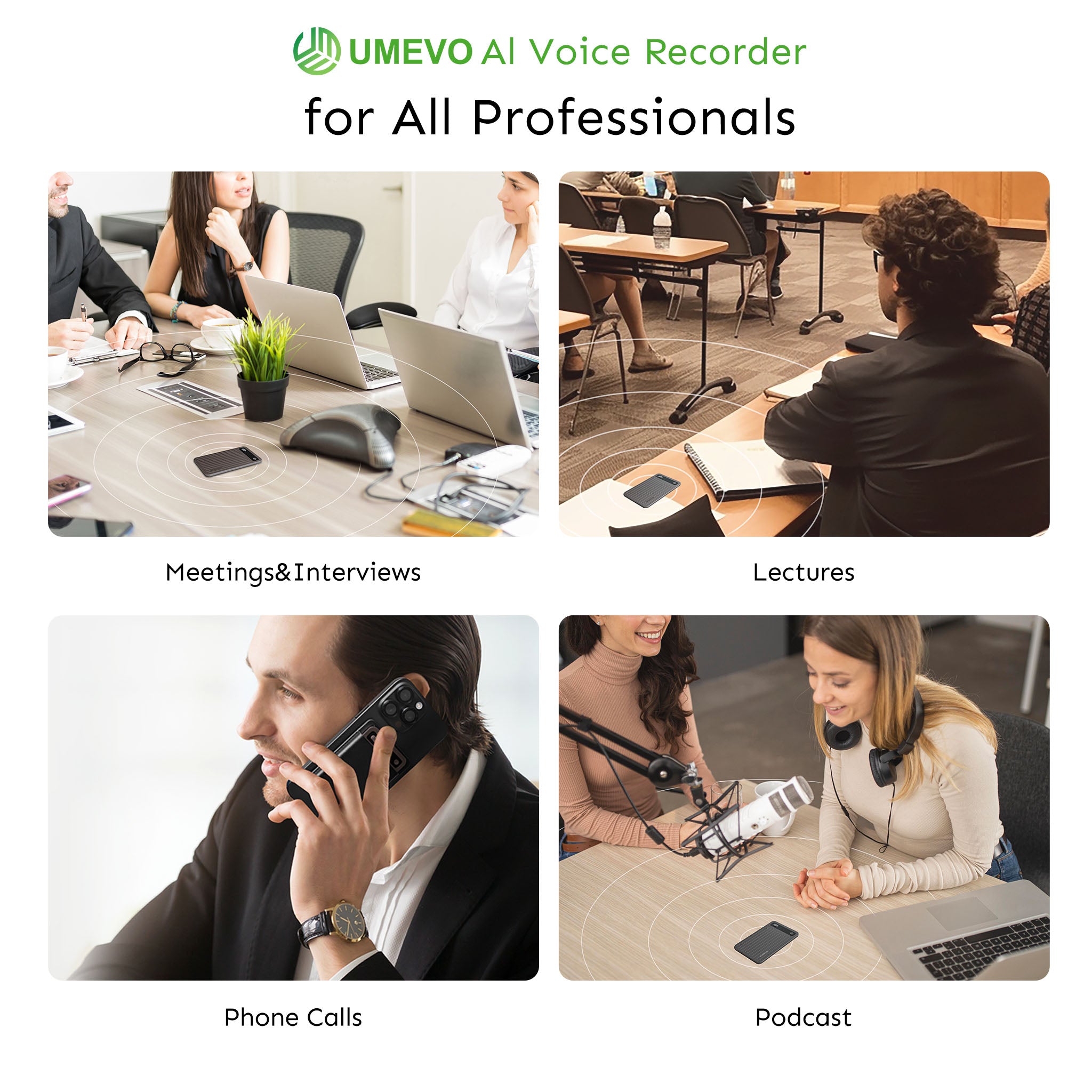
With 64GB of local storage, a device can hold hundreds of hours of uncompressed audio. This means a consultant can record a month of confidential client strategy sessions entirely offline, ensuring no sensitive data touches a third-party cloud until they choose to process it.

To maintain rapport while satisfying two-party consent laws, professionals must replace disruptive automated pop-ups with human-to-human verbal disclosures. A natural phrasing such as, "Mind if I take local AI notes so I can stay focused on you?" establishes consent without triggering the Hawthorne Effect.

Scenario-Based Decision Framework: Choosing a Recording Method
| Meeting Scenario | Recommended Recording Method | Specific Trade-off |
|---|---|---|
| Internal Team Syncs | Approved Enterprise Auto-Joiner | High visibility; potential for the Hawthorne effect among junior staff. |
| High-Stakes Client Pitches | Bot-Free Local Desktop Recording | Requires manual start/stop functionality and explicit verbal disclosure. |
| Confidential Legal/Medical Calls | Local Hardware Recorder (e.g., UMEVO Note Plus) | Lacks automated calendar joining; requires physical device management and manual file offloading. |
Community Consensus on AI Meeting Bots
Users on community forums often report severe consent fatigue from managing multiple bot disclosures per day. A common consensus among enterprise sysadmins is that managing rogue bots has become a primary security headache, often requiring network-wide blocks on specific domains. Real-world testing suggests that clients are significantly more likely to speak candidly when assured the recording is processed locally rather than sent to a cloud-based auto-joiner.
Conclusion
While the desire for perfect documentation is valid, sending an uninvited bot is the equivalent of bringing an uninvited lawyer to a coffee chat. Your recording method must protect the client's psychological and legal safety. Audit your organization for Shadow AI auto-joiners and transition sensitive client-facing workflows to localized, bot-free recording alternatives.
Frequently Asked Questions
How do we stop rogue auto-joiner bots from secretly recording sensitive third parties?
IT departments must implement network-level blocks on known bot domains and enforce strict calendar permission policies to prevent third-party applications from scraping meeting links.
Is it legal to use a bot-free desktop recorder under two-party consent laws?
Yes, provided you obtain explicit verbal consent from all participants before initiating the local recording. The method of recording (local vs. cloud) does not negate the legal requirement for consent in two-party jurisdictions.
Why are enterprise companies banning third-party AI note-takers?
Enterprises are banning them due to Shadow AI risks, where unvetted applications store sensitive corporate data on external servers, violating GDPR, HIPAA, and internal data sovereignty policies.
What is the difference between Shadow AI and approved enterprise AI?
Shadow AI consists of unauthorized tools adopted by individual employees without IT oversight. Approved enterprise AI operates within the company's secure tenant, ensuring data is not used to train external public models.
How do AI meeting bots impact attorney-client privilege?
Introducing an unsupervised third-party AI bot into a meeting destroys the reasonable expectation of privacy, which courts have ruled constitutes a waiver of attorney-client privilege.





0 comments