

With Apple expanding Apple Intelligence directly to the wrist through Audio Intelligence and Siri Recap, the Apple Watch can now ambiently monitor conversational surroundings, summarize spoken discussions, and allow instant dialogue recovery via features like Live Rewind. This development has prompted an important question for modern knowledge workers: Does on-wrist ambient intelligence render dedicated AI voice recorders obsolete?
The short answer is no. While the Apple Watch has become an exceptional tool for spontaneous wrist dictation, ambient lifestyle catch-ups, and personal fitness tracking, it is fundamentally engineered around an ephemeral, privacy-first model that intentionally discards raw audio. Conversely, professional environments—such as multi-hour board meetings, legal depositions, and two-way client negotiations—demand uncompromised battery endurance, permanent verbatim audio records, and hardware-level call capture. This guide objectively compares Apple Watch’s ambient audio capabilities with dedicated AI voice recorders (such as the UMEVO Note Plus) across architecture, acoustic fidelity, legal compliance, and total cost of ownership.
Direct Answer: Choose by Workload, Not Device Category
For passive daily recall, quick voice memos, and seamless ecosystem integration, the Apple Watch is the natural choice. For prolonged professional documentation, two-party cellular call recording, and audit-ready verbatim audio archival, a dedicated AI voice recorder remains essential. The practical breakpoint occurs when a session exceeds three hours, when a legal or business record requires the underlying audio file as proof, or when phone calls must be recorded with two-way acoustic clarity without relying on open speakerphones.
Ambient Recap vs. Permanent Verbatim Archival
The Apple Watch Philosophy: Ephemeral Intelligence Without Raw Audio
Apple’s Audio Intelligence architecture introduces a breakthrough in daily ambient assistance. Features like Siri Recap listen passively to meetings, lectures, or casual discussions, leveraging on-device neural engines to generate titles, high-level summaries, and bulleted action items stored within the Siri app. Meanwhile, Live Rewind allows users to double-tap the Digital Crown to catch dialogue spoken in the preceding 15 seconds.
However, Apple achieves its strict privacy standard through ephemerality: audio streams are isolated in secure hardware enclaves, converted to text/summaries, and the raw audio is immediately discarded. The watch does not create a permanent, playable audio file of the ambient conversation.
While this architecture is ideal for personal productivity and alleviates workplace privacy friction, it introduces material limitations in formal settings:
- No Evidentiary Trail: In executive disputes, contractual negotiations, or legal proceedings, an AI-generated summary carries no legal weight without the primary, unaltered audio source of truth.
- Inability to Audit Discrepancies: If an AI misinterprets technical terminology, foreign accents, or financial figures, the user has no original audio track to cross-reference or correct.
- Usage Caps and Retention Limits: Ambient summaries that are not explicitly saved can expire, and advanced cloud-routed processing remains subject to daily ecosystem quotas.
Dedicated Recorders: Full-Fidelity Archival and Verbatim Transcription
Dedicated AI hardware, such as the UMEVO Note Plus AI Voice Recorder, follows an entirely different paradigm: complete capture plus synthesis. Instead of discarding the raw acoustic stream, the device records uncompressed, high-fidelity audio directly to 64GB of onboard non-volatile flash storage while simultaneously processing structured AI transcriptions and summaries across 140+ languages.
This dual capability gives corporate teams, attorneys, and journalists both the convenience of structured executive minutes and the security of a permanent, timestamped audio archive that can be exported, audited, and preserved indefinitely.
Battery Life Determines Which Device Survives a Workday
Smartwatch Power Budgets Under Sustained Microphone Load
Apple’s standard 18-hour battery rating reflects intermittent use: passive background sensors, periodic notifications, and brief interactions. When the microphone array is engaged continuously for active recording or persistent ambient analysis, real-world battery life plummets to approximately 3 to 5 hours.
This creates a significant operational risk. An executive recording an all-day quarterly business review or a researcher attending a five-hour symposium will likely end the session with a depleted watch. Because the Apple Watch also manages communication, digital keys, boarding passes, and health alerts, draining its battery for audio capture compromises the user’s primary wearable for the rest of the day.

Dedicated Hardware Battery Architecture
Dedicated voice recorders decouple audio capture from mobile operating systems and wearable battery budgets. Operating on a low-power, single-purpose system architecture, the UMEVO Note Plus provides up to 40 hours of continuous active recording and up to 60 days of standby time.
Because the device manages its own power supply and writes directly to local flash memory, it can record back-to-back conferences without requiring a midday recharge, all while leaving the user's iPhone and smartwatch batteries completely untouched.
Session Vulnerability and Interruption Resistance
On watchOS, background audio recording remains vulnerable to system interruptions. An incoming cellular call, an emergency alert, or a high-priority push notification can preempt the audio channel and pause or terminate third-party recording apps mid-session.
Dedicated recorders operate in physical isolation. Physical toggle switches prevent accidental touch-screen cancellation, and power-fail protection circuits ensure that if the battery ever completely depletes during a session, the current audio file is safely finalized and closed to prevent data corruption.
Call Recording: The iOS Architecture Gap
The iOS Sandbox and Mandatory Audible Alerts
Due to Apple’s strict security sandboxing, watchOS and third-party iOS applications cannot tap directly into the baseband processor to record cellular or VoIP phone conversations (such as WhatsApp, Zoom, or FaceTime calls). While native iOS call recording provides an integrated solution, it enforces a mandatory, unmutable system prompt—“This call will be recorded”—broadcast audibly to all parties upon initiation.
In many sensitive executive interviews, delicate HR discussions, or informal background research, an automated robotic prompt abruptly changes conversational dynamics or halts dialogue altogether.
The Speakerphone Compromise
To record a phone call using an Apple Watch without triggering system software hooks, the user is forced to place the iPhone on open speakerphone. The watch's wrist microphone then captures the room’s acoustic reflection rather than direct-line audio.
This creates severe acoustic degradation:
- Echo and Room Reverberation: Sound waves bounce off walls and surfaces before reaching the wrist.
- Speakerphone Clipping: The smartphone’s full-duplex DSP dynamically suppresses incoming and outgoing voices simultaneously, causing cutouts.
- Reduced AI Accuracy: Compromised audio input directly degrades downstream AI speech-to-text accuracy and makes automated speaker diarization nearly impossible.

Vibration Conduction as a Hardware Workaround
The UMEVO Note Plus overcomes software sandbox barriers through physical sensor engineering rather than software bypasses. Equipped with a dual-mode hardware switch, the device offers two discrete capture paths:
- Meeting Mode: Omnidirectional MEMS air-conduction microphones capture ambient voices across conference rooms.
- Phone Call Mode: A specialized piezoelectric vibration conduction sensor snaps magnetically (via MagSafe) to the back of the smartphone chassis. It reads acoustic sound waves directly from the phone’s internal speaker resonance and body vibrations.
Because the piezoelectric sensor detects mechanical vibration rather than airborne sound, it cleanly captures both the user's voice and the caller's voice directly from the phone chassis—without requiring speakerphone mode and without injecting electronic noise into the cellular stream.
Legal Compliance Remains the User's Responsibility
While dedicated hardware enables clean call capture without an automated electronic chime, users must remain compliant with statutory consent frameworks. Under federal law (18 U.S.C. § 2511), one-party consent is legally sufficient in many jurisdictions. However, states such as California (California Penal Code § 632 and § 632.7), Florida, and Pennsylvania enforce strict all-party consent laws. The absence of an automated robotic chime does not eliminate disclosure obligations; it simply restores control over how disclosure is communicated.
Acoustic Fidelity and Conference Room Ergonomics
Wrist Placement vs. Centralized Acoustic Boundary
The ergonomic realities of a wrist-worn wearable pose notable acoustic challenges:
- Microphone Occlusion: Long sleeves, suit cuffs, and arm movements against conference tables introduce friction noise and mechanical clipping.
- Acoustic Shadowing: As the user takes handwritten notes, gestures, or types on a laptop, the watch microphones continually shift directional axis relative to room speakers.
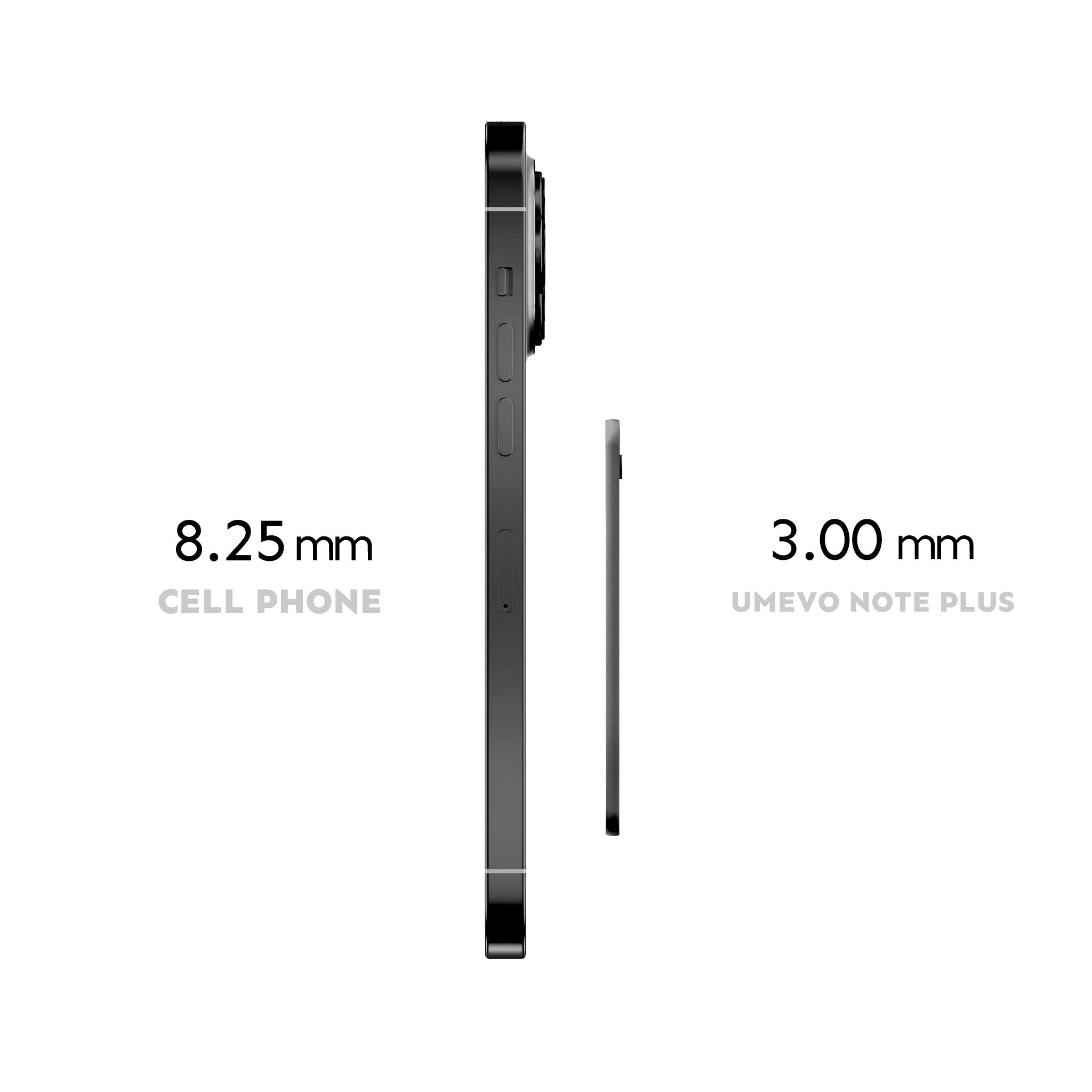
A slim, magnetic recorder placed flat in the center of a table acts as a stable boundary microphone. Omnidirectional sound reception remains uniform across participants, delivering a balanced signal-to-noise ratio that dramatically enhances downstream automated transcription.
Diarization and Screen Discretion
Accurate multi-speaker diarization depends entirely on clear acoustic channel separation. Furthermore, interacting with a smartwatch during a confidential board meeting or delicate commercial negotiation introduces social friction: a glowing, interactive watch face can give the impression of distraction or personal messaging. A screenless, matte-black card sitting inert on a table or magnetically attached to a phone captures meetings with complete discretion.
Total Cost of Ownership: App Subscriptions vs. Bundled AI
The Hidden Software Tax of Smartwatch AI
While the Apple Watch hardware represents an initial investment of $399 to $799+, extending its recording capabilities for professional transcription typically requires ongoing SaaS subscriptions. Enterprise-grade meeting transcription tools carry substantial recurring costs:
- Otter.ai Pro: ~$99.96 to $203.88 per year with monthly conversation caps.
- Third-party watchOS AI transcription apps: Typically charge between $9.99 and $19.99 per month for unlimited audio conversion, adding $360 to $720 over three years of usage.

The Bundled Value Architecture
Dedicated devices like the UMEVO Note Plus shift the cost structure from metered subscriptions to bundled hardware value. Each unit includes one full year of unlimited AI transcription and GPT-level structured summaries out of the box, supporting 140+ languages without monthly minute counters or tier limits.
Combined with 64GB of local storage that holds thousands of hours of audio offline, professionals eliminate recurring monthly software invoices while gaining dedicated hardware built specifically for high-capacity voice workflows.
Comprehensive Evaluation Matrix
| Evaluation Criteria | Apple Watch (Audio Intelligence / Siri Recap) | Dedicated AI Voice Recorder (UMEVO Note Plus) |
|---|---|---|
| Primary Design Intent | Ambient lifestyle capture, health tracking, and quick contextual recall (Siri Recap / Live Rewind) | Dedicated, high-capacity meeting documentation, verbatim archival, and two-way call recording |
| Raw Audio Archival | None (Audio is processed and discarded immediately for privacy; summaries only) | Full Archival (Complete, uncompressed audio permanently stored on 64GB flash memory) |
| Continuous Recording Battery | 3 to 5 hours under sustained active microphone usage | Up to 40 hours continuous recording; 60 days standby |
| Two-Way Phone Call Capture | Requires open speakerphone; native iOS recording broadcasts automated audible chimes | Hardware piezoelectric vibration sensor captures chassis acoustics cleanly without speakerphone |
| Onboard Storage Capacity | Shared with apps, media, and watchOS; heavily dependent on iCloud sync | 64GB dedicated onboard flash memory (hundreds of hours of local storage) |
| Software & Subscription Costs | Native summaries included, but professional verbatim transcription requires $10–$30/mo third-party SaaS | 1 year of unlimited AI transcription & structured summaries included with device purchase |
| Cross-Platform Compatibility | Locked strictly to the Apple ecosystem (requires compatible iPhone) | Universal compatibility with both iOS (MagSafe) and Android smartphones |
| Enterprise Privacy Compliance | Consumer-tier device processing; variable third-party cloud policies for add-on apps | SOC 2 Type II certified, HIPAA readiness, GDPR compliant, local AES-256 encryption |
Enterprise Privacy and Data Sovereignty
For corporate executives, legal counsel, and healthcare professionals, audio data governance is paramount. Both devices approach privacy with serious architectural rigor, but with distinct trade-offs:
- Apple’s Ephemeral Model: By processing audio through on-device models and discarding raw recordings, Apple prevents long-term audio exposure. However, because no master recording is stored, users cannot maintain internal enterprise archives or satisfy formal chain-of-custody requirements.
- Dedicated Enterprise Pipeline: The UMEVO Note Plus combines AES-256 local hardware encryption with TLS 1.3 encrypted data transit. Audio files and transcripts are managed within private, enterprise-grade cloud environments compliant with SOC 2 Type II, HIPAA, and GDPR standards. Client audio is strictly isolated and never ingested into public large language model training pools.
Summary: The Workload-Matching Framework
The emergence of Apple Watch Audio Intelligence and Siri Recap represents a major leap forward in passive, ambient life-logging. For catching fleeting conversations, recalling recent discussions with Live Rewind, and taking short voice memos without carrying an extra gadget, the Apple Watch is unrivaled.
However, ambient smartwatch notes are not built to replace dedicated enterprise audio hardware. When your workload requires verbatim audio records that withstand scrutiny, uninterrupted 40-hour battery life, clean two-way phone call recording, and predictable annual costs, a dedicated AI voice recorder is the engineered solution.
The UMEVO Note Plus AI Voice Recorder fills this exact role with its ultra-slim MagSafe magnetic profile, dual-mode piezoelectric switch, 64GB dedicated storage, and a full year of included unlimited AI transcription. It is not an alternative to your smartwatch—it is a specialized capture layer for your most critical professional conversations.
Explore full specifications and enterprise workflows at UMEVO.
Frequently Asked Questions
1. Can Apple Watch Siri Recap replace a dedicated meeting recorder?
It depends on your workflow. Siri Recap is designed for ambient, high-level summaries and personal reminders, but it intentionally does not store the original raw audio file. If your work requires an auditable audio record, verbatim transcripts with precise speaker diarization, or multi-hour endurance, a dedicated AI voice recorder is required.
2. Can an Apple Watch record regular phone calls without speakerphone?
No. Due to iOS and watchOS security sandboxing, third-party smartwatch apps cannot access internal cellular or VoIP audio streams. The only way an Apple Watch can capture a phone call is if the phone is placed on open speakerphone in the room, which introduces echo, reverberation, and reduced transcription accuracy.
3. How does the UMEVO Note Plus record two-way phone calls?
The UMEVO Note Plus uses a built-in piezoelectric vibration conduction sensor. When magnetically attached to the back of an iPhone or Android device, it detects mechanical sound vibrations conducted through the phone's chassis from the earpiece. This captures both sides of the conversation cleanly without needing speakerphone or software workarounds.
4. Does a magnetic recorder work through protective phone cases?
Yes. The recorder attaches seamlessly to any MagSafe-compatible case or third-party phone case equipped with a standard magnetic alignment ring. Direct contact with a MagSafe case provides reliable acoustic vibration transmission for phone call capture.
5. What happens if a dedicated AI recorder runs out of battery during a meeting?
The UMEVO Note Plus writes audio streams directly to local flash storage in continuous increments. If the battery drops to zero during a session, the onboard power-fail system finalizes and safely closes the active audio file before shutting down, preventing file corruption or lost records.
References
- Apple Watch - Battery Information and Testing — Apple Inc.
- Apple Intelligence: Private, Powerful, Personal — Apple Inc.
- Recording Telephone Conversations & Regulatory Guidelines — Federal Communications Commission (FCC)
- California Penal Code § 632 - Eavesdropping on Confidential Communications — California Legislative Information
- Otter.ai Plans & Pricing (Monthly/Annual Transcription Caps) — Otter.ai Inc.
- HIPAA Security Rule & Technical Safeguards — U.S. Department of Health and Human Services (HHS)





0 comments