

Strategic Tool Guide: This analytical guide covers the ideal AI meeting recorder nonprofit board setup for governance professionals prioritizing legal compliance and budget efficiency.
Board minutes are strictly legal records of decisions, not transcripts of conversations. Adopting the wrong AI meeting recorder can trigger a legal nightmare by making off-hand comments discoverable in litigation. You need an AI tool that captures Robert's Rules of Order (Motions, Seconds, Quorum) without forcing a visible "bot" into your Zoom grid—and one that allows you to permanently destroy the raw audio to limit legal liability.
Why "Sales" Note-Takers are a Massive Legal Liability for Nonprofits

Sales-focused AI note-takers are a liability because they prioritize verbatim conversation capture and CRM integration over the strict data destruction and parliamentary procedure tracking required for fiduciary governance.
Current market leaders like Otter and Fireflies are engineered for revenue teams. They highlight features like "talk-to-listen ratios," sentiment analysis, and Salesforce integrations. For a nonprofit board secretary, these features are useless. Worse, they encourage the retention of data that boards are legally advised to destroy. When analyzing budget vs. premium AI recorders, it becomes clear that many tools focus on the wrong metrics for governance.
The enterprise standard for AI meeting security in 2026 has moved beyond simple "secure recording" claims. According to Sprinto & The Diogenes Club (2026 SOC 2 Compliance Guides), SOC 2 Type II compliance requires an observation period (typically 3 to 12 months) to prove security controls operate effectively over time, and AES-256 encryption is the mandated standard for protecting data at rest. Procurement committees must reject consumer-grade tools that lack these audited security baselines.
Pro Tip: While many guides suggest using cloud-based AI to create a searchable database of past meetings, professional governance workflows actually require automated data deletion to minimize audit footprints.
Does Keeping a Full AI Transcript Open Us Up to Legal Liability?
Keeping a full AI transcript opens nonprofits to legal liability because verbatim records of off-hand board comments become legally discoverable during litigation or IRS audits.

A dangerous misconception exists that nonprofits should use AI to transcribe every single word of their board meetings to maintain a "perfect memory" of the event. The legal reality is the exact opposite. Audio recordings and verbatim transcripts of board meetings are legally discoverable in litigation. According to The Law Firm for Non-Profits & VisionServe Alliance, legal best practice dictates that recordings should only be retained as long as necessary to prepare written minutes, then permanently deleted pursuant to a written document destruction policy.
If a board member makes an off-hand comment during a heated debate (e.g., "We don't really have a policy for that"), a permanent verbatim AI transcript transforms that casual remark into a permanent liability.
To mitigate this, boards must adopt the "Liability Filter" strategy. Use AI strictly to extract the Robert's Rules essentials: Date, Quorum Verification, Motions, Seconds, Votes, and Adjournment. Once the legally compliant minutes are generated, the raw audio and transcript must be securely destroyed.
Finding the Right AI Meeting Recorder Nonprofit Board Setup: Budget-Friendly Options
The right AI meeting recorder nonprofit board setup relies on tools that offer local processing, bot-free native capture, or specialized hardware to ensure privacy and compliance without recurring subscription traps. This is a critical consideration when searching for the best no-subscription AI voice recorders 2026.
The Ultimate Privacy & Budget Hack: Hyprnote
For nonprofit boards handling highly sensitive financial or HR governance, cloud-based AI poses an unnecessary security risk. Hyprnote processes 100% locally using on-device models like Whisper and HyprLLM so no data ever leaves the user's machine, according to 2026 SourceForge benchmarks. Experts point out in video tutorials that users must search for "hyprnote.com without the E" to find the correct open-source repository. Because it runs locally, sensitive board notes bypass cloud privacy concerns and recurring subscription fees entirely.
The "Bot-Free" Stealth Option: Shadow.do
Older board members often find visible AI bots intrusive. Shadow.do operates completely bot-free by capturing system audio and smart screenshots natively at the OS level. As experts note in visual stress tests, "You can take meeting notes without this awkward thing joining your call." However, according to the Shadow.do Official Blog (2026), the software is strictly limited to macOS. Boards with mixed PC and Mac usage will find this limitation prohibitive.
The Multilingual Board Option: Fathom.ai
For nonprofits with diverse or international boards, Fathom.ai offers robust language support. However, budget-conscious boards must read the fine print. According to MeetJamie.ai & CheckThat.ai (2026 Fathom Pricing Reviews), Fathom.ai's free plan offers unlimited recording and transcription in 25 languages, but as of 2026, it strictly caps advanced AI summaries at 5 calls per month.
The Hardware Alternative: UMEVO Note Plus
For remote-only boards, software like Hyprnote remains the stronger choice because it integrates directly with desktop audio. However, for hybrid boards who prioritize offline, physical control over their recordings without software troubleshooting, the UMEVO Note Plus offers a more secure path.
📺 Top 8 AI Meeting Notes apps in 2025, I particularly like the open source one that runs locally so
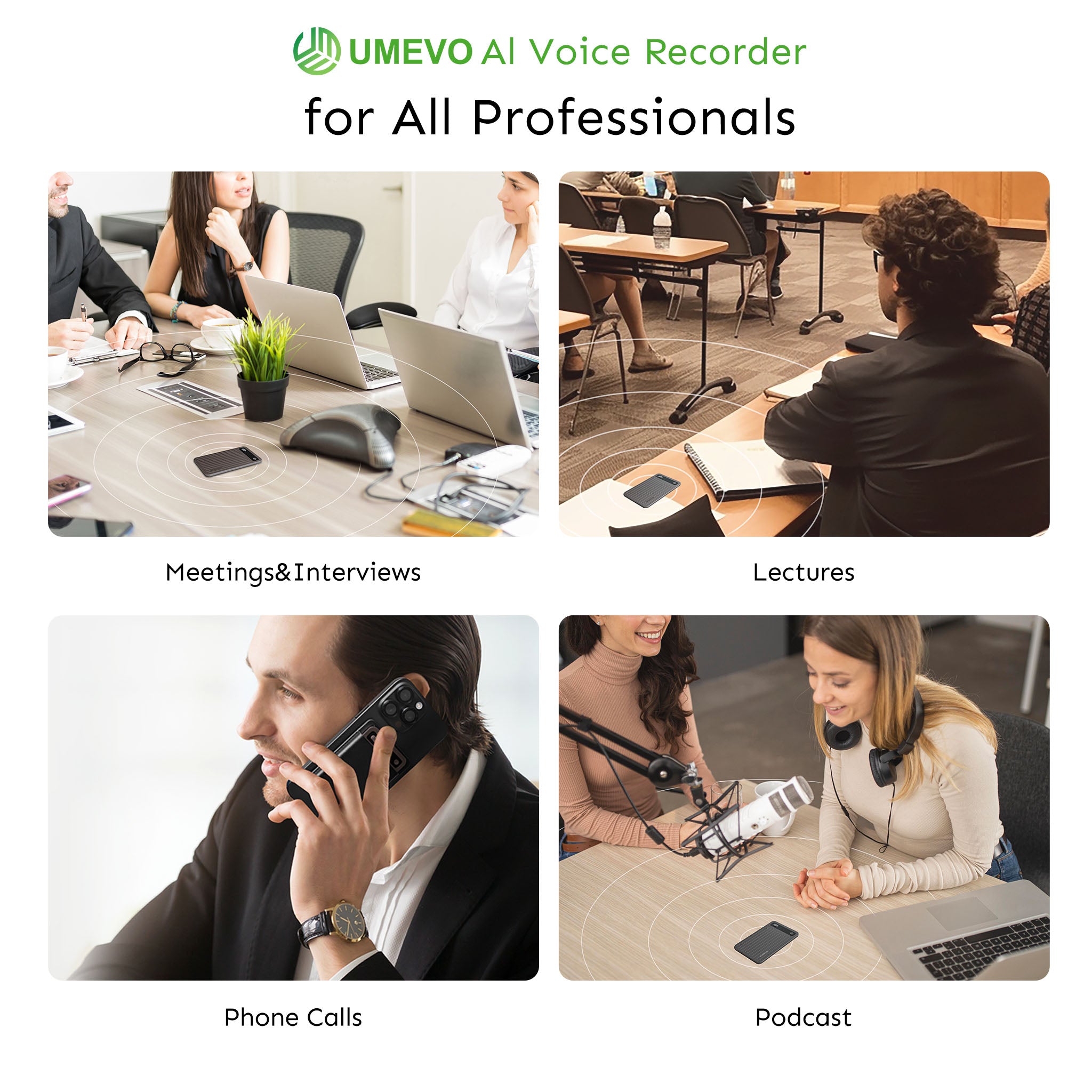
This device attaches magnetically to smartphones and features a unique vibration conduction sensor specifically designed to capture phone calls directly from the phone's chassis, bypassing the need for software recording permissions. With 64GB of built-in storage, a secretary can record 400 hours of uncompressed audio. This means a board secretary can record a full weekend governance retreat on a single charge (40 hours continuous battery life) without needing to offload files to a vulnerable laptop in the field. A physical switch allows users to instantly toggle between "Call Recording" (vibration-based) and "Note Recording" (standard air-conduction for in-person meetings), ensuring no cross-talk is missed during heated votes. Furthermore, it avoids the immediate subscription trap by offering 1 year of free, unlimited AI transcription services (Max Plan).

Governance Tool Comparison

| Feature / Metric | Hyprnote | Shadow.do | Fathom.ai | UMEVO Note Plus |
|---|---|---|---|---|
| Data Processing | 100% Local / Offline | Cloud (macOS only) | Cloud | Cloud (via App) / Local Storage |
| Bot-Free Capture | Yes (System Audio) | Yes (System Audio) | No (Visible Bot) | Yes (Physical Hardware) |
| Subscription Cost | Free (Open Source) | Paid Subscription | Free Tier (Caps at 5 summaries/mo) | 1 Year Free (Max Plan included) |
| Best For | Strict Data Sovereignty | Mac-based Stealth Recording | Multilingual Translation (25 languages) | Hybrid/In-Person Physical Control |
Tools to Avoid: The Microsoft Copilot Trap & The "Awkward Bot" Stigma
Microsoft Copilot and visible AI bots are detrimental to board meetings because Copilot fails for external guests, and visible bots create social friction among non-technical members.
Many organizations assume they can simply use their existing Microsoft 365 licenses for board meetings. This is a critical error. According to Microsoft Support & Microsoft Q&A documentation, Microsoft Copilot cannot be used or interacted with by external guest participants (e.g., volunteer board members) in meetings hosted by another organization's tenant due to strict privacy and compliance boundaries. If your board consists of volunteers using external email addresses, Copilot will completely fail to provide them with meeting summaries or action items.
Furthermore, the social dynamics of formal governance require discretion. In visual stress tests, experts explicitly warn against the social friction of standard AI note-takers, describing them as an "awkward thing joining your call." Having an Otter.ai bot visibly sitting in the participant list is unprofessional and frequently makes older, less tech-savvy board members uncomfortable, altering the natural flow of the meeting.
How Do We Get AI to Accurately Track "Motions" and "Seconds"?
AI accurately tracks motions and seconds through advanced speaker diarization and specific prompt engineering that forces the LLM to format outputs strictly into legally binding minutes.
A common consensus among enthusiasts and board secretaries on community forums is that generic AI summaries fail at parliamentary procedure. When multiple board members speak over each other during a vote, standard transcription blends the text. Modern native desktop clients handle overlapping voices using advanced speaker diarization, separating audio channels to identify exactly who spoke.
To guarantee compliance, secretaries must use Prompt Engineering for their Automated Transcription Service (ATS). Instead of asking the AI to "summarize the meeting," use a strict prompt: "Analyze this transcript. Extract only the following: 1. Time of Call to Order. 2. Quorum verification. 3. Exact phrasing of all Motions, the name of the person who motioned, and the name of the person who seconded. 4. The final vote tally. 5. Time of Adjournment. Ignore all casual conversation and debate."
Conclusion & Final Summary
AI meeting recorders should function as a legal shield, extracting necessary parliamentary actions while facilitating the immediate destruction of raw audio to protect the nonprofit.
As experts note regarding corporate efficiency, "Most meetings are a waste of time anyway, the least you can do is have AI summarize your key takeaways." However, for nonprofit boards, the stakes are higher than mere efficiency. The goal is compliant documentation, not casual recaps. By selecting tools that prioritize local processing (Hyprnote), bot-free capture (Shadow.do), or physical hardware control (UMEVO Note Plus), organizations can relieve overworked secretaries without inviting legal liability.
Call to Action: Protect your organization today. Download our free "Nonprofit AI Prompt Template for Robert's Rules of Order" and our "Data Destruction Policy Template" to ensure your AI adoption complies with fiduciary standards.
Frequently Asked Questions
Are AI meeting recorders legal under the Brown Act or FOIA?
Yes, provided the recording is announced and the resulting minutes are made available to the public as required by law. However, retaining the raw audio longer than necessary increases FOIA exposure.
What is the best free AI meeting recorder for a 501(c)(3)?
Hyprnote is the most secure free option as it is open-source and processes locally. Fathom.ai offers a strong free tier for cloud users, though it limits advanced summaries to 5 per month.
Can I use an AI transcriber without it showing up on Zoom?
Yes. Tools like Shadow.do capture system audio natively at the OS level, and hardware recorders capture audio physically, preventing a visible bot from joining the participant list.
How long should a nonprofit board keep audio recordings of meetings?
Legal best practice dictates destroying the audio recording immediately after the formal written minutes have been approved by the board, pursuant to a strict document destruction policy.




0 comments