

Analysis: This clinical guide covers an AI voice recorder for therapists session notes for mental health professionals seeking to eliminate documentation backlogs without compromising HIPAA compliance or patient trust.
Digital voice recorders preserve audio evidence better than smartphones, but introducing an ambient scribe into a clinical setting requires strict ethical boundaries. While generic transcription apps save time, they expose private practices to severe data breach liabilities. This framework establishes how to implement zero-data-retention AI tools to automate SOAP notes, maintain continuous eye contact during sessions, and protect the therapeutic alliance.
The Documentation Burnout Crisis vs. Quality of Care
The documentation burnout crisis is a systemic threat because administrative fatigue directly reduces a clinician's ability to facilitate clinically meaningful patient improvement.
Over 93% of behavioral health clinicians report burnout symptoms, with administrative work driving burnout for 82% of those affected, according to PIMSY EHR 2026 Industry Reports and WCHSB 2025 Behavioral Health Data. The "note backlog" is not a personal time-management failure; it is a structural flaw in modern private practice. Comparing Medical dictation vs. AI voice recorders reveals how much time clinicians can save by moving toward ambient solutions.
The Hidden Cost of the "Note Backlog"
The impact of documentation fatigue extends beyond the clinician's personal life and directly degrades patient outcomes. According to JAMA Network Open and APA Practitioner Pulse Survey Data, patients treated by burned-out therapists achieve clinically meaningful improvement only 28.3% of the time, compared to 36.8% for patients treated by non-burned-out therapists. Consequently, automating documentation is a clinical imperative, not just an operational convenience.
Reclaiming Eye Contact and Presence
Ambient listening technology shifts the narrative from "speeding up admin" to protecting the Therapeutic Alliance. By utilizing a dedicated device to capture the session, clinicians remove the physical barrier of a laptop screen. This allows for continuous eye contact and deep clinical presence, ensuring the patient feels heard rather than merely processed. Lessons from AI transcription for life coaches show that focusing on the client rather than the notes is the gold standard for rapport.
Pro Tip: While many guides suggest typing shorthand notes during sessions to save time, professional workflows actually require ambient listening because breaking eye contact disrupts the client's psychological safety and causes clinicians to miss subtle non-verbal cues.
The Compliance Gap: Why a BAA is No Longer Enough for AI Notes
A standard Business Associate Agreement (BAA) is insufficient because it permits encrypted data storage, whereas modern compliance requires immediate, permanent deletion of raw audio.
The most dangerous myth in clinical technology is that any encrypted software with a signed BAA is safe for therapy sessions. In 2026, a BAA represents only baseline security.
The $50,000 Consumer App Mistake
Using standard smartphone voice memos or generic transcription tools for clinical sessions crosses a federal legal line. According to Accountable HQ 2026 Penalty Updates and American Dental Association (ADA) HIPAA Guidelines, HIPAA civil penalties for "willful neglect" (Tier 4) carry a minimum fine of $50,000 per violation, with annual caps reaching over $2.13 million in 2026. Furthermore, criminal penalties for wrongful disclosure can include $50,000 fines and up to 1 year in prison.

The New Standard: Ephemeral Processing (Zero Data Retention)
To guarantee psychological safety, clinicians must utilize Ephemeral Processing. According to TryTwofold 2026 HIPAA AI Guidelines and the Aisera 2026 Healthcare AI Report, the 2026 standard dictates that the AI processes data in-memory to generate the note and permanently deletes the raw audio and text immediately (often within 1 hour), without writing it to a database or disk.
The LLM Training Threat
Standard AI APIs, such as OpenAI's default API, retain data for 30 days for abuse monitoring (Source: OpenAI Enterprise Privacy Policy / Accountable HQ 2025-2026). To remain compliant, therapists must ensure their vendor uses specifically configured "Zero Data Retention (ZDR)" endpoints. These endpoints explicitly block Patient Health Information (PHI) from being logged, reviewed by human moderators, or used to train foundational AI models.
Protecting the Therapeutic Alliance: The Informed Consent Blueprint
The informed consent blueprint is a clinical necessity because transparently explaining ephemeral AI technology transforms a potential privacy objection into a demonstration of dedicated client focus.
Does Asking to Record Ruin Psychological Safety?
Therapists frequently fear that introducing a "listening machine" will cause clients to censor themselves. However, when framed correctly, the introduction of an ambient scribe reinforces trust. The key is emphasizing that the machine does not "listen" to judge; it processes audio ephemerally so the human therapist can listen better.
The Client Introduction Script (Word-for-Word)
Do not ask for permission using technical jargon. Use this exact framing:
"I'm using a secure, ambient clinical tool today. It doesn't save audio; it just securely summarizes our session so I can give you 100% of my focus instead of staring at my notepad. The audio is permanently deleted the moment we finish. Are you comfortable with me using this so I can be fully present with you?"
Turning Privacy Objections into Value-Adds
If a client hesitates, validate their concern immediately and offer the alternative. "I completely understand. I will turn it off and take manual notes today." Giving the client absolute veto power over the technology demonstrates that their autonomy supersedes your convenience, which inherently strengthens the therapeutic alliance.
How to Choose an Ambient Scribe: Essential Clinical Criteria
Selecting an ambient scribe is a strategic decision because the hardware and software must seamlessly capture the clinical narrative without introducing subscription bottlenecks or data vulnerabilities.
📺 You Can Do This For FREE
Protecting the "Golden Thread"
An effective clinical AI must track the "Golden Thread"—the continuity of care and overarching clinical narrative across multiple sessions. It should synthesize current session data with past treatment plans rather than treating each 50-minute hour in a vacuum.
Mitigating Clinical "Hallucinations"
Consumer-grade AI often attempts to "smooth out" transcripts, occasionally inventing dialogue or clinical symptoms that were never spoken. Clinical-grade ambient scribes are strictly prompted to extract only verbatim data, preventing licensing risks associated with falsified medical records.
Hardware vs. Software: The Subscription Trade-off
In visual stress tests of popular AI recorders, experts point out a critical limitation for high-volume users. While the PLAUD device app offers excellent speaker tagging, the interface reveals a hidden "Buy Extra Quotas" menu. Users are hard-capped at 1,200 transcription minutes (20 hours) per month. For a therapist seeing 20 to 30 clients a week, this premium subscription runs out of minutes halfway through the month, forcing them to purchase additional blocks of time.

Conversely, experts point out that the native Samsung Voice Recorder app on Galaxy devices offers a powerful, free alternative for basic transcription without subscription paywalls, though it lacks specialized clinical formatting. Furthermore, visual tests of the built-in Google Pixel recorder show it failing to summarize standard 20-minute recordings, throwing a "Transcript is too long" error.
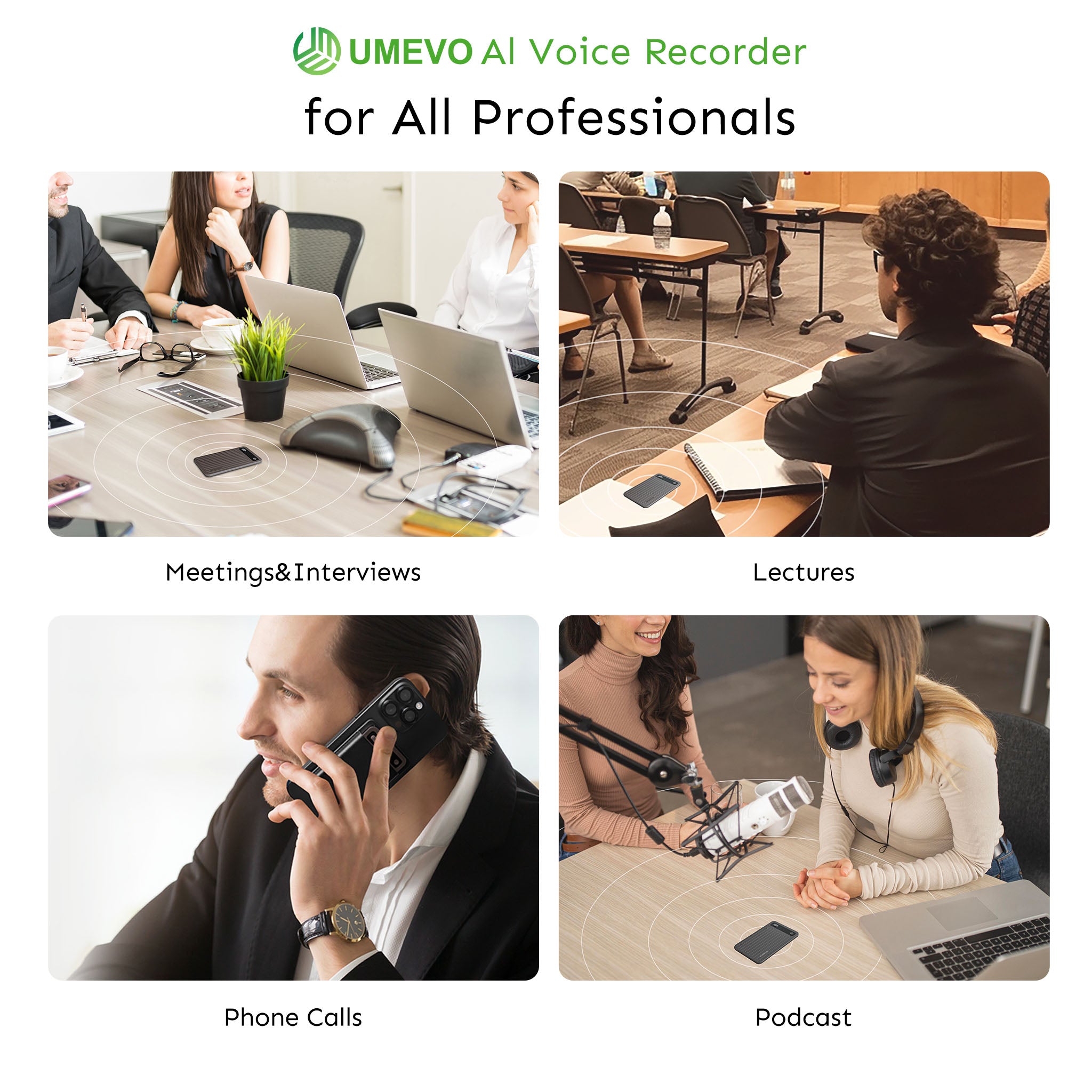
For clinicians who operate entirely within a telehealth software ecosystem, integrated ambient scribes like AutoNotes remain the stronger choice because they embed directly into the EHR. However, for hybrid practitioners who prioritize offline hardware reliability and predictable costs, the UMEVO Note Plus offers a more cost-effective path. With 64GB of local storage, a clinician can record over 400 hours of uncompressed audio, ensuring a full month of in-person and phone sessions can be securely captured offline. Crucially, it avoids the 20-hour monthly cap trap by offering 1 year of free, unlimited AI transcription (Max Plan), making it the strategic winner for high-volume private practices seeking cost leadership.

Will an AI Scribe Compromise Client Psychological Safety?
An AI scribe is safe because ephemeral processing ensures no audio is retained, provided the clinician strictly enforces zero-data-retention policies and transparent consent.
To ensure absolute safety, follow this 3-step checklist:
- Verify ZDR Endpoints: Confirm in writing that the vendor uses Zero Data Retention API endpoints, not just standard encryption.
- Execute a BAA: Never process a single session without a signed Business Associate Agreement on file.
- Enforce Ephemeral Hardware: If using a physical device, ensure it is wiped daily and never connected to unsecured public Wi-Fi networks.

Entity Comparison: Clinical AI Voice Recorders
| Entity Type | Data Retention Policy | Monthly Minute Caps | Best For |
|---|---|---|---|
| Generic Consumer App (e.g., Apple Voice Memos) | Indefinite (High Risk) | None | Personal voice notes (Non-clinical) |
| Cloud-Based AI Recorder (e.g., PLAUD) | 30-Day Cloud Storage | 1,200 mins (20 hours) | Business meetings, low-volume users |
| Dedicated Clinical Hardware (e.g., UMEVO Note Plus) | Local Storage (Manual Wipe) | Unlimited (Year 1) | Hybrid therapists, high-volume offline sessions |
| EHR Software Scribe (e.g., AutoNotes) | Ephemeral (Zero Retention) | Tiered by Subscription | 100% Telehealth practitioners |
What The Community Says
- Users on community forums often report that the anxiety of a potential HIPAA audit far outweighs the convenience of using free consumer AI tools like standard ChatGPT for session summaries.
- A common consensus among enthusiasts is that physical hardware recorders are superior for in-person EMDR or somatic therapy sessions, as having a laptop open in the room disrupts the physical space required for treatment.
- Real-world testing suggests that clients forget the ambient scribe is running within the first five minutes of the session, provided the therapist maintains strong, empathetic eye contact.
Conclusion & Next Steps
AI voice recorders are no longer a futuristic luxury; they are a necessary safeguard against the documentation burnout crisis. However, mental health professionals must reject generic consumer tools and demand Ephemeral Processing, strict BAAs, and transparent informed consent protocols to protect their clients and their licenses.
FAQ
Is an AI voice recorder for therapy HIPAA compliant?
Only if the vendor provides a signed Business Associate Agreement (BAA) and utilizes Zero Data Retention (ZDR) endpoints to ensure patient health information is never used to train AI models.
Does the AI store my client's session audio?
Generic apps store audio indefinitely. Clinical-grade ephemeral scribes process the audio in-memory and permanently delete the raw file immediately after generating the text summary.
What happens if the AI hallucinates a symptom in my session notes?
The clinician is legally responsible for the final note. You must review and sign off on all AI-generated SOAP notes to ensure clinical accuracy before committing them to the EHR.
Do I need a separate consent form for ambient listening in therapy?
Yes. Best practice dictates updating your standard intake paperwork to include a specific clause regarding the use of ephemeral AI transcription tools, alongside verbal consent at the start of the session.





0 comments